
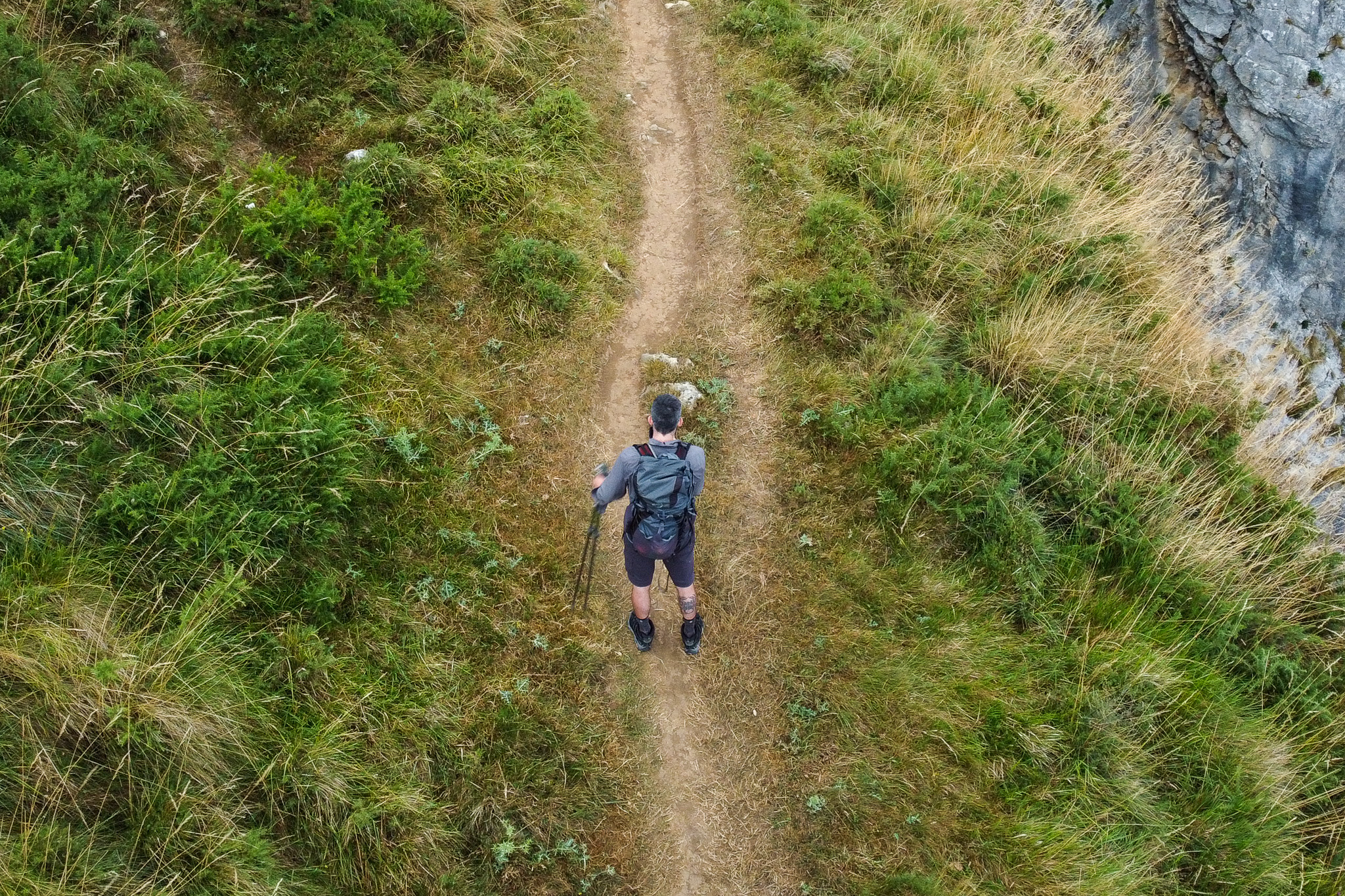
The Camino de Santiago is one of the most famous pilgrimage routes in the world, attracting hundreds of thousands of travelers each year. It is a journey that is known for its spiritual significance, stunning landscapes, and warm hospitality.
For those who opt to travel alone, the Camino can be an incredible adventure, providing opportunities for self-discovery, personal growth, and a chance to connect with fellow travelers from all over the world.
If you are considering solo travel on the Camino de Santiago, this in-depth guide is for you. Here, we’ll cover everything you need to know to make the most of your journey and put your worries to rest.
Why travel solo on the Camino de Santiago?
The most common reason that people undertake solo travel is that they are having a hard time finding someone who has the same motivations and availability as them.
Whether you have a unique work situation that allows you the flexibility to walk the Camino or your friends just aren’t interested, there are tons of reasons you should still consider going it alone.

Benefits of hiking the Camino solo
There are several benefits to completing a solo hike, like having complete control over your plans and being open to unexpected experience that come your way.
Flexibility to reroute
Once you’re out on the trail you may start to hear stories from other pilgrims about what their plans are for the coming weeks. The beauty of keeping an open mind about your plans is that you can always switch once you’re there, provided you haven’t booked everything in advance.
This flexibility also lets you go at your own pace, hiking as far as you like each day and maybe taking a few hours to explore a town that catches your fancy.
Flexibility to spend a few days on a side quest
Though there are official, marked Camino routes, Spain is criss-crossed with hundreds of other hiking trails that intertwine with the official Camino paths.
If you decide you want to hike one of these side routes for a bit or explore a small town for an afternoon, walking on your own gives you the freedom to do so. Especially if you’re hiking in the summer months you’ll find many small villages are holding arts festivals, food festivals or any number of other celebrations.
If you’re hiking on your own the decision to stay an extra night is simple. If you have fallen in with a group of hikers you can just tell them you’ll meet up with them a few days later. The beauty of hiking solo is that you decide when to sleep late, when to take a day off or when to keep hiking a little further.
Flexibility to start as late or as early as you’d like

Agreeing on when to wake up and go to bed can be a tricky balance to strike when you’re trying to complete a camino with a friend or loved one. I met people on my camino who had decided to split up every morning and other couples who went together the whole way. Neither one is right or wrong, it’s just about finding what works for you.
Going it alone is an easy way to be sure that you won’t have any trouble with syncing up schedules. If you want to sleep in, you sleep in, and if you want to take a day off because your knee hurts then there is no argument about lost time. You’re in total control of your plans.
Meeting new people
Hiking the Camino on your own puts you in a unique position to meet new people and form fast friendships with them. Often when we travel with a group of friends we’re locked into an existing dynamic and it can be hard to branch out.
Walking by yourself puts you in a situation where you are much more open and able to make friends with people you meet on the trail. From my own experience I can tell you that you will meet some incredible people this way, swapping stories on the trail before one of you stops for food or drink and you part ways.
Over a week or so you’ll run into several of the same people and start to build up a ‘Camino family’, finding people who walk at your same pace and have a similar rhythm to their daily routines.
Enjoying the solitude
Some people set out on a Camino adventure simply looking for a little peace and quiet. Walking alone through forests and over mountains can be a great way to find peace and solitude while physically challenging yourself.

Potential downsides to hiking the Camino solo
You’ll have to keep a closer eye on your belongings
With no one to help you watch after your things you alone will be responsible if something goes missing. This really was not much of an issue on my hike, but try to be extra cautious about leaving your pack unattended.
This often means taking an extra minute to make sure that your things are secured before you use the restroom or go to sleep for the night. After a long day of hiking this is easier said than done, so try to get in the habit of securing your things and making sure there are no valuables visible before you head to bed.
While some albergues will have lockers with keys, many will not. So try to limit the valuable items you carry with you and don’t leave anything in plain sight if you plan to leave your pack unattended.
You’ll be more likely to get lonely
While loneliness is a natural part of solo travel it can be especially difficult as you first set off on your journey. The first week of a Camino brings a lot of changes with new languages, new locations, new experiences all at once. It can be a destabilizing experience at first but you will quickly meet several others in a similar situation.
In this day and age most locations will have WiFi and you can easily get a european SIM card for your phone if you need internet out on the trail. Staying in touch with friends and family while abroad is easier now than ever. If you’re feeling a bit lonely, know that you can always reach out to people back home and talk to them about it. And remember that in a few short days, if not on the first day, you will already be making new friends on a similar journey.
Planning your solo Camino journey
Choosing your route can be one of the more difficult decisions you have to make early on in the planning stage. The route you choose will determine where you want to fly into as well as the character of your overall experience.

Most popular routes
- Camino Francés 55%
- Camino Portugues 19%
- Camino to Ingles 6%
- Camino Primitivo 6%
- Camino del Norte 5%
This list provides some rough calculations as to what percentage of pilgrims do these routes each year. When planning your Camino you should keep in mind that a higher number of pilgrims usually means there will be more robust infrastructure in place.
Most physically challenging routes
- Camino del Norte (512 miles / 823 km)
This route has significant elevation changes that make the first few weeks tough for people with knee problems. It’s nice to walk on the beach but this route takes you down to the shore and back up again several times. It’s beautiful but it can also be brutal if you have not physically trained. It has a total elevation gain of almost 58,000 feet - Via de la Plata (596 miles / 960 km)
This route has some very long days of up to 20 miles (32km) between places to stay. That combined with the fact that it’s one of the longest Camino routes earns it the number two spot. Most pilgrims manage to do this route from Sevilla in about 40 or 50 days. - Camino Primitivo (200 miles / 321 km)
Though this route is not as long as many of the others it features some incredibly steep ascents and descents. - Camino Francés (491 miles / 790 km)
This route is generally doable for most all fitness levels but if you start at the traditional starting point of Saint-Jean-Pied-de-Port, factoring in the distance makes this route longer than many others. - Camino Portugues starting from Lisbon (383 miles / 616 km)
While the Portuguese way is flatter than many other Camino routes, if you are starting from Lisbon the distance covered makes this route strenuous.
Depending on your goals and timeline there are a few factors to consider before choosing a camino. You should keep physical fitness in mind when planning the distances you want to cover each day as well as the changes in elevation.
If you have not done any sort of physical preparation you can certainly still complete a Camino, just know that you will experience blisters and significant aches and pains along the way. You will likely want to walk a bit slower and carry as little weight as possible.
Walking on your own can actually help in this aspect because you won’t push yourself trying to keep pace with anyone potentially hurting yourself in the process. This was a common complaint I heard out on the trail when groups tried to hike at the same pace.

If you’re doing this hike to find peace and quiet I would recommend some routes with less traffic like the Camino Primitivo or the Camino del Norte. You should, however, factor your level of fitness into the equation as well.
If you are just starting out with these types of longer journeys I would recommend trying something shorter like the Camino Portugues starting from Porto or the Camino Francés starting from Sarria. As long as you walk at least 100km (about 60 miles), you’ll still receive the official paperwork for completing a Camino pilgrimage.
Best times to go
The most popular time for completing a Camino route is from April through October. August can however get quite hot in Spain so if you plan to hike in this month be sure to stay hydrated.
August is also likely the most hectic month because most europeans are on vacation and traveling. Flights get more expensive, accomodation gets harder to find and generally things will feel busier. I would personally recommend June and July as my favorite months to complete a Camino.
Summer and early fall see the best weather conditions but most routes are doable throughout the whole year. The only thing you might have to worry about in spring is excessive rainfall, but it’s very hard to predict. The best thing you can do is prepare for all weather conditions and get used to hiking in the rain.
The least busy season has to be winter. Much of northern Spain is comparable to Ireland as far as rainfall goes, so expect extremely wet winter and spring seasons. If you’re looking for solitude and don’t mind a little cold weather then winter could be a good option for you. Just make sure to check ahead with the albergues you plan to stay at because many shut down in the winter months.
For the best experience I would personally wait until spring, but if you have a seasonal job and the only time you can hike the Camino is in the winter then I say go for it. If you are willing to pay a bit of extra money to stay in a hotel in case you come across a seasonally closed albergue then you should be able to do it.
Packing essentials for the Camino

Quick list of absolute essential gear:
- Backpack with a rain cover (ideally under 30 liters if possible)
- Breathable boots or shoes – with at the very least 30 or 40 miles walked in them to make sure that they are broken in, that the fit is good and that you won’t experience any problems out on the trail
- Hiking/trekking poles
- Hydration pack or water bottle
- 3 pairs of breathable socks, underwear and shirts
- Hiking pants or shorts
- Hat (preferably with a full brim – I started without one and I regretted it)
- A set of clothes to wear after you’re done hiking for the day and that you can sleep in
- A lightweight microfiber towel
- Toiletries
- Phone charger
- Insulated coat for higher altitudes, rainy days and cold nights
- Waterproof rain jacket
- A few sets of earplugs
- Some type of lightweight sleeping bag or sleeping bag liner, depending on the season. If it’s summer you can get away with just the sleeping bag liner and maybe use your insulated coat as a blanket if you get cold.
You can certainly bring more things like a camera, powerbank, long phone charging cable, etc. but just be extremely cautious about overpacking. I met very few pilgrims on their first Camino who wished they had brought more things along.
I initially thought I might need a tent and a sleeping pad but these just ended up being overkill. Especially if the weather is hot you’ll want to take a shower after a long day of hiking and you will be more than willing to pay 10 euros for that luxury.
Between the warm shower and saving you the hassle of setting up and breaking down a tent in the morning dew it is really just not worth bringing it along. Leave the tent at home, save the weight in your pack and try to enjoy the albergue experience. Just don’t forget a good set of earplugs in case there are snorers where you’re sleeping. In my experience, there are always snorers.
Budgeting for a solo Camino
Regardless of which route you choose there are some average minimum prices you should be using to figure out your daily costs. These include things like daily meals, snacks, coffee, a place to sleep and any incidental costs you may incur.
I wrote an article all about budgeting for your Camino trip and the average costs you should plan for, which you can find here.
On average I spent somewhere between 25-45 euros a day in total. Depending on your tolerance for discomfort this could be lower on average or significantly higher. It’s really up to you how much you’ll be spending but planning for an average of 35 or so euros will set you up for a good trip.
Let’s look at a typical day in expenses to give you a general idea of what to expect.
- Breakfast: 6 euros for a coffee, a glass of orange juice, a pastry or some sort of breakfast sandwich
- Lunch: 6-10 euros for a sandwich and a drink at a typical bar
- Dinner: 10-12 euros for complete dinner including a drink and dessert
- Lodging: 10-12 euros per night for a bed in a shared dorm at an albergue for pilgrims or a privately owned albergue. If you’d rather not sleep in a shared dormitory in most towns you can find individual rooms from 30 to 35 euros.
It’s also worth noting that I stopped at supermarkets to get some sort of nuts or fruit every few days. The Camino is unique in the aspect that you walk by several supermarkets or fruit stores each day. Compared to any remote thru-hiking experience the Camino is actually a pretty luxurious adventure.
Accommodations for solo travelers

Public albergues
Public albergues are by far one of the cheapest ways to complete a Camino, but they often provide only minimal amenities. These accommodations are first come, first served and you can only stay there for one night unless you have a serious hiking-related injury.
One important fact to keep in mind about public albergues is that they do not take reservations. Period. If you intend to stay at the public albergue in a small town you should try to get there as early as possible to make sure that you can reserve a spot for yourself that night.
The public albergue system was created in response to the increasing numbers of people who started to make this pilgrimage in the 1990s. They started out as simple shelters like gymnasiums or churches where they would throw some beds in a room and let pilgrims sleep there for the night.
At these bare-bones establishments you can expect to find several bunk beds in large rooms, ranging anywhere from 8 to 50 people. Another very important detail to keep in mind is that when they close the doors for the night (usually around 10pm) that door is locked until the next morning. So make sure to ask what time they lock up and be sure to be inside before then.
If you arrive at the public albergue and they’re already full for the night, the good news is that most Camino towns have private albergues as well.
Private albergues
Privately run albergues, or ‘albergues privados’, offer only slightly more in the way of amenities. The major advantage is the ability to book your lodging in advance.
The privately run albergues tend to have WiFi, take reservations and will allow you to send your bag ahead of time. There’s a whole industry based around people sending their bags ahead to be able to hike without the extra weight. This is another one of the major distinctions between public and private albergues.
Availability is often better at the private albergues because they cost slightly more than the public ones. In reality it is only a few euro difference so if you would prefer to take your time and enjoy the walk you might want to book the stay once you decide on your stopping point for the day.
Albergues Donativos
These accommodations are completely funded by donations received from guests. In my experience they were run one of two ways; either doing the bare minimum and providing simple shelter with no extra ammenities, or pulling out all of the stops and providing dinner, breakfast, laundry etc. to get the highest possible donations.

Some of these ‘donativos’ were by far my favorite stays on the Camino. The above picture shows part of the compound that makes up one of the most interesting places I stayed on my hike. The proprietor brought all of the pilgrims into a main presentation room where he gave a speech telling the history of the place before dinner.
The dinner we ate was simple but good as was breakfast the next day. Overall most donativos were incredible experiences and I would highly recommend staying in at least one or two when you make your Camino.
Safety concerns and precautions for albergues
In both public and private accommodations you should be aware of where you are leaving your things. Rural Spain is generally a very safe place to travel but if you leave your wallet in plain view on your bed while you shower it might eventually disappear. It’s best to keep your valuables tucked away out of sight whenever possible.
The system that I found worked best was to carry a small collapsible backpack inside of my large pack. When I was done hiking for the day I would shower, put on my evening clothes, take out the collapsible pack and put all of my valuables inside. This way I could leave my pack at the albergue without fear of losing my passport, camera or important documents while I explored the town and got some dinner.
Dining and socializing on the Camino

Enjoying local cuisine
Spain is famous for many foods and in Galicia the seafood is world class. It would be a shame to make it all the way out there only to eat bread and pasta every day. As you walk through cities and towns, stopping to try some local cuisine and a glass of beer or wine is one of the best parts of the Camino.
One aspect of walking on my own that I loved was that I got to know all of the different groups of people walking around the same time as me. This meant that if I stopped to eat in a small village I often knew at least one table of diners and could easily join them.
Making friends on the trail
As you get to know people out on the trail you hear their stories and backgrounds. It’s incredibly easy to strike up a conversation and I met some incredible people out on the trail. If I found someone that I got along with particularly well I would often make it a point to stop and grab a coffee with them or to slow down or speed up to continue a good conversation.
Depending on what you’re looking for you can strike up all kinds of relationships on the trail. Whether you’re looking for a romantic, platonic or other type of relationship, walking the Camino is a great way to make lifelong friends. I’m still in contact with many people I met on my first Camino and they helped me make memories I’ll cherish for the rest of my life.
Whatever your Camino goals are, don’t be afraid to pause for a day to regain your strength. I planned in one rest day a week but made sure to plan enough days that in case of injury I would still be able to finish my Camino. If I took a day to rest or even two days to go hike a different trail, I found that by the end of the Camino I knew just about everyone hiking two days ahead of me and two days behind me.
Sharing experiences with other pilgrims is without a doubt one of the best parts about the Camino. People walking the same path as you are generally going to be open to meeting new people, so with just a little effort you’ll make dozens of friends that you can chat with in the evenings or out on the trail.
Dealing with loneliness and homesickness on the Camino

It is not uncommon for people to feel lonely part way through their journey. You may have left friends and loved ones behind to complete this journey and maybe you’re feeling homesick. You could be wondering why you decided to come walk across Spain in the first place.
Whatever your motivation was for starting this journey, trust that this reason will be enough to see you through to the end. If you have picked a long route you may lose some of that initial energy that you started the hike with. This could be a sign that you need an extra day to rest, recover and remember why you’re there in the first place.
Coping mechanisms for solo travel
Reaching out to family and friends back home is easier now than ever before. Take time to message your loved ones and set up a call at a time that works for both of you. Using apps like Whatsapp, Facebook Messenger or Signal has made international travel much, much easier these days.
My advice here is to be proactive about setting up these calls ahead of time. Coordinating calls across time zones often takes more time than you’d think, so reach out early and agree upon a time to chat. I would plan a few calls on my ‘rest days’ on the Camino and spend an hour or two in a café checking in with friends and family.
It’s important to schedule these calls ahead of time because with the time change it’s much harder to coordinate. There’s nothing worse than playing phone-tag across several time zones. Take the extra time to schedule your calls and you won’t regret it.
Finding community and support on the Camino
Just because you are doing a ‘solo trip’ doesn’t mean you can’t make friends and socialize – quite the opposite. You should be meeting people and making friendships that will last for many years to come. The solo aspect just means that you’re on your own when you first get there. Many hikers will find a ‘Camino family’ and stick with them the entire time.
Hiking solo is not about being alone, it’s about being free to socialize and adjust your plans on the fly if you really want to. I made friends with all types of people from Ivy League professors, school teachers, students, teenagers, young professionals and retirees on my Camino journey.
Embrace the fact that you’re free to socialize and free to reroute if you feel like it. I had met some really interesting people early on during my Camino hike and they were instrumental in me deciding to adjust my route to Santiago. The people you meet make up most of your Camino experience, so embrace the flexible nature of solo hiking and do what feels right.
Final thoughts
Many people dream of setting off on this adventure but are held back by the fact that their friends or loved ones can’t join them. I hope this article has helped ease some of the worries you may have about traveling to Spain alone and maybe motivated you to start planning your own trip.
Whether you’re seeking spiritual enlightenment, adventure, or a chance to connect with new people, the Camino de Santiago is a journey that will challenge and inspire you in ways you never thought possible.
Let me know down in the comments if you found this article helpful or if you have any of your own useful tips for solo pilgrims. Whether you’re just planning your first Camino or you’re a long time veteran, ¡Buen Camino!
Leave a Reply