
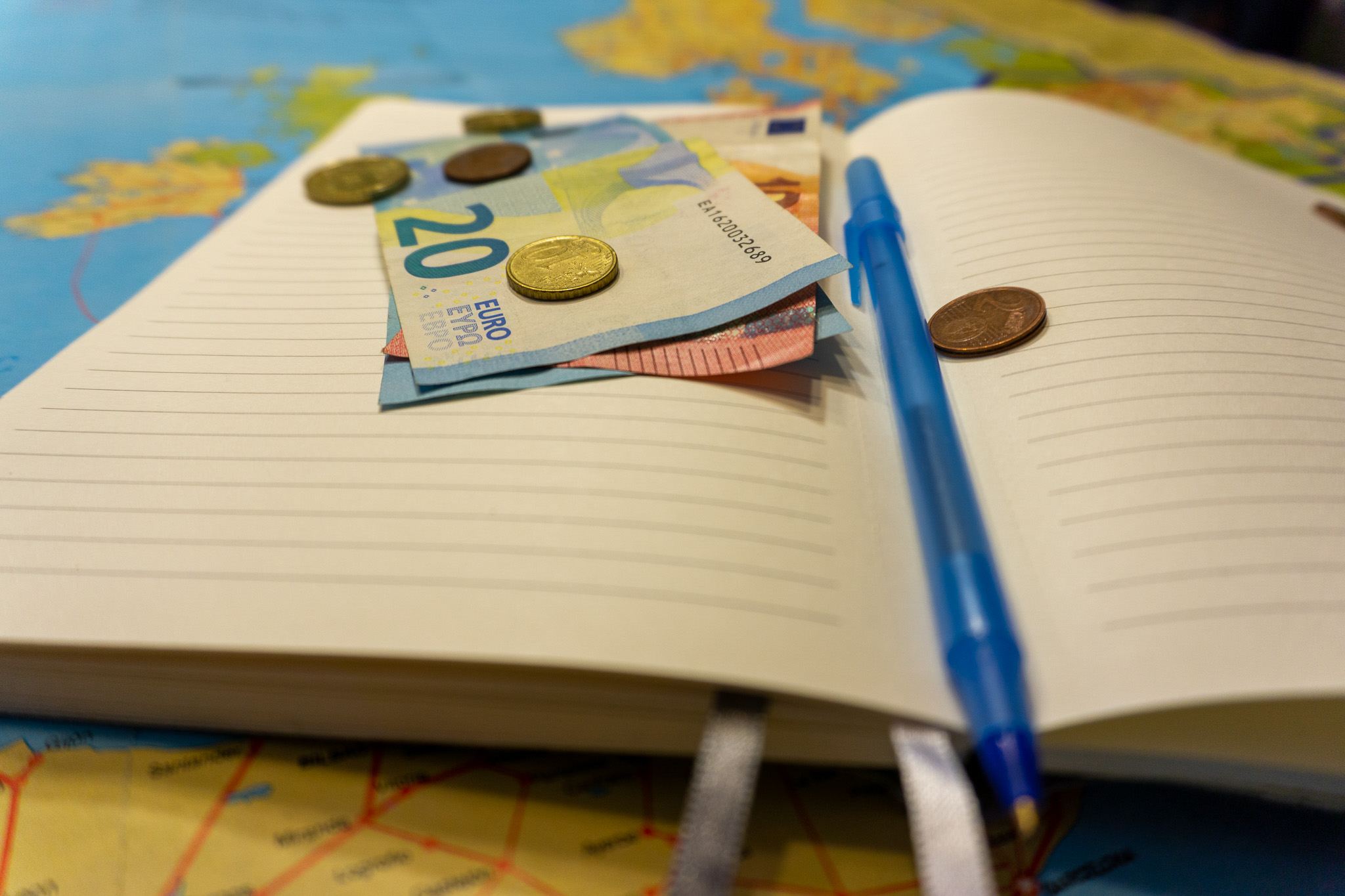
In talking with hundreds of pilgrims in Spain, I found a common theme as to why they enjoyed the Camino so much. Though their motivations varied, they all said they loved the simplicity of their daily routines; wake up, walk, eat, explore, sleep, repeat. The best way to avoid stressing about your budget and truly being present in the moment is to set up a clear budget ahead of time.
While walking the Camino can be an inexpensive adventure depending on where you set out from, the costs can vary wildly depending on what gear you need and your chosen route.
In this article, I dive into some of the major expenses you’ll have to budget for and some cost ranges for how much to expect to spend each day.
Planning your route
Before you start thinking too hard about your budget, you should decide which Camino you plan to hike. Would you prefer the coastal Camino del Norte or the inland Camino Francés? Do you want to meet other pilgrims and socialize, or do you want to spend more time alone with your thoughts? There are dozens of different routes you can take that each have their own pluses and minuses.
For me, the choice was simple. I used to live right near the start of the Camino del Norte and I also used to live near Santiago, so in order to catch up with old friends this route was a no-brainer.

Flights
Traditionally, pilgrims would start their adventure directly from their doorstep, though these days people come from all over the world to hike the Camino. I won’t provide an estimate of cost here because prices vary so much depending on your starting point.
Just keep in mind that the cheapest route is likely to involve flying into a major city like Barcelona, Madrid, Lisbon or Bilbao and then taking a bus or train to the starting point of the chosen route.
If you’re trying to decide where it might be best to fly in or out of, take a look at my article on cities to fly into for the different Camino routes.
Bag Transport Service
One additional option which is popular on the Camino Francés is to send your backpack ahead of you and have it dropped off at an albergue in the next town. This allows you to hike without weight on your back but requires you to make reservations ahead of time.
The public albergues are all first come, first serve, and if you send your backpack there, there is no guarantee that you will have a bed reserved for you that night. I have included a link at the end of this article if you want more information on these pack-shipping services.
With these things in mind, let’s jump into some other major factors that will affect your budgeting.
Gear

As a bit of a gearhead, it’s easy to get carried away in planning any new adventure. So while I could easily make a list of things that you could potentially use on this hike, I’m going to try to limit this list to just the essentials.
The three things I would absolutely recommend bringing are some decent footwear, a hat and a quality pack that distributes the weight you are carrying well. Most everything else falls into the ‘nice to have, but not 100% necessary’ category.
Boots vs. Shoes vs. Sandals

Footwear is possibly one of the most important pieces of equipment you will take with you on the whole adventure. Rule number one for any hiking vacation is to take good care of your feet.
If you ignore them, you’ll be going home just as fast as you got there. The big debate these days is the decision between traditional hiking boots and trail running shoes.
Your footwear needs will vary based on your personal hiking experience, the weight you’re carrying and which route you end up taking.
Boots
Boots provide ankle support, which is essential for many hikers. It’s particularly helpful for navigating varied terrain and hills with a heavy pack, so if your ankles have you worried, I would recommend finding a sturdy pair of boots.
These can also offer you protection from brush and thorns along paths that are overgrown or don’t see much foot traffic.
Shoes
Trail running shoes provide significant weight savings over boots and are often better ventilated, which can help in keeping your feet dry and blister-free. But if you’re carrying a heavy pack, the soles of your shoes can be quickly worn down as they are not designed to support additional weight.
I also find that shoes tend to get soaked faster than boots do in the rain, which is a big issue on the Camino.
Sandals
I would recommend against sandals unless you have a lot of experience hiking with them and have properly broken them in. For parts of the Camino Francés and some of the other flatter trails, this can be a comfortable option if you have an issue with sweaty feet.
Again, I do not recommend hiking these types of distances wearing sandals. I know somewhere out there a Chaco-hiker is screaming while they read this, so if that’s you, just ignore this section. But for 98% of hikers, heavy hiking sandals are not appropriate for this hike.
No matter which option you decide to go with, be sure to break in your footwear on several long walks before taking them onto the Camino. Breaking in a pair of shoes is an extremely important step that should not be skipped. If you develop blisters on the first day or two of walking, these will most likely continue to irritate your feet for the weeks following after. Blisters are a part of the Camino, but don’t make them worse than they have to be.
In a final note on footwear, you may be thinking that waterproof sounds ideal for a rainy hike across northern Spain, but you’d be wrong. Waterproof boots and shoes do not allow sweat to evaporate, which will quickly lead to massive blisters forming on your feet. So be sure that whichever shoe or boot you go with is sturdy and allows your feet to breathe.
Estimated cost
Low end: €0-60
High end: €80-120
Backpacks

Though you have to carry all of your clothes and toiletries for the whole time you’ll be in Spain, the fact that you don’t need a tent means that you can get away with carrying significantly smaller packs than you would on a thru-hike.
I would recommend finding a pack around 30 liters or at the very most 38L, because anything larger than that is excessive for this hike. I’m sure some people will disagree, but the reason I’m making this point is that the more room you have in the pack, the more things you will ultimately bring.
By limiting your pack size, you limit your ability to overpack and carry unnecessary weight all the way across Spain.
You should also be careful with pack size because most airlines will not let you take a backpack larger than 35 liters as a carry-on item. If you were planning on avoiding baggage fees and the headache of dealing with checked bags, remember to keep your pack as small as you can. Your feet and your back will thank me later.
One other thing you might want to factor in is a hydration bladder for your backpack with a hose for easy access to water. Not having to stop to get a sip of water will make your life significantly easier, especially if you are hiking in the hot summer months.
Estimated cost
Low end: €60-100
High end: €100-200
Sleeping Gear
Most hikers bring a lightweight sleeping bag or, if they’re hiking in summer, even just a sleeping bag liner. If you are planning to stay in the albergues you’ll only get some paper sheets at the majority of them. For warmth and sanitation’s sake, at the bare minimum, bring the sleeping bag liner. It’s basically like a bedsheet with a pouch for a pillow that you can climb into.


The main difference between expensive and inexpensive sleeping bags will be the weight and the bulk. More expensive means lighter weight and less room taken up in your pack.
Estimated cost
Low end: €15-30 for a simple bag liner.
High end: €40-150 for a quality, lightweight sleeping bag.
The one other piece of gear that I will argue is 100% necessary is a decent hat. I hiked almost the entire Camino with a baseball cap, and I wish that I had a full brimmed hat the entire time. On sunny days your ears can quickly get burnt walking in the midday sun.
Other hiking specific gear like sweat-wicking socks, hiking shorts or pants, packable coats, trekking poles and sweat-wicking base layers will make your Camino much more comfortable if you can afford them. If you are really on a tight budget, you can certainly get by without the fancy gear.
Note that you cannot fly with certain items if you’re planning on only bringing a carry-on bag. This includes things like knives and trekking poles, so if you intend to bring those make sure you plan accordingly and either check them in a bag or buy them once you arrive in Spain.
Before flying home, I donated my knife and trekking poles to a friend because I knew they would be taken away at the airport. After over 40 days of consistent use, I would say that I got my money’s worth!
Estimated Total Gear Costs
Low end: €100
Hiking with the supplies you already own or borrowing some things from friends and family. While this is not ideal, this was the way that many people used to do it, starting from wherever they lived with whatever they had. Being realistic, at minimum a decent pair of hiking shoes, a pack, a microfiber towel and a decent raincoat will go a long way.
High end: €500+
If you don’t have any equipment whatsoever, these costs can add up pretty quickly. A new pair of boots, a backpack, trekking poles, insulated layers, raincoat, merino wool socks, sleeping bag and any other equipment you may want can eat up your budget pretty quickly.
The good news is that most of this equipment will last a long time, so by investing in quality gear you can take subsequent hiking trips. Once you have the gear, hiking is one of the least expensive pastimes out there.
Accommodations
On average you can expect to pay around 10-12 euros a night at the cheaper end of the spectrum, though prices vary in different regions of Spain. Costs can go as high as 50 to 100 a night for a nice hotel if you are staying in a city. The nice part of the Camino is that you have the option to choose, so maybe once every two weeks or so you can treat yourself to a nice private room without completely blowing your budget.
If you’re traveling with a friend or significant other you could split a private room with access to a shared bathroom that could cost you on average around 30-40 euros. This is a great option because it gets you some privacy but realistically is not too much more expensive than the cost of a bunk in a shared dormitory.
Estimated Costs
Low end: €10-12 per night for a bunk in a shared dorm.
High end: €30-40 per night for a private bedroom with a double bed.
Food and Dining Out
On an average day you can expect to pay between 20-40 euros for meals, snacks, coffees and drinks. This is a fairly conservative estimate but if you plan to dine at nice restaurants expect to budget a little bit more. Since the Camino passes through many cities and small towns you can find restaurants on almost every leg of the hike.
Alcohol is incredibly affordable in Spain and if you go to a restaurant for a ‘menú del dia’ or ‘menú peregrino’ it usually includes a glass of wine or a beer. Always be sure to clarify with your server because many tourist traps will upcharge for things typically included like bread, drinks or desserts. A bottle or glass of beer can cost between 2-4 euros on average and wine will usually cost between 3 and 5 euros.

Common bar food in northern Spain: Txistorra and sausage sandwiches with some fried croquetas. This cost around 5 euros along with a coffee
I would typically carry some food with me during the hike like nuts and dried fruit, stop for coffee and some light snacks (tortilla, premade sandwiches or whatever they had at the local bar) and that would keep me going until I finished hiking for the day when I could eat a proper meal.
Estimated costs
Low end: €20-35 for breakfast, snacks, coffees and one, maybe two meals out each day
High end: €40-60+ for breakfast, snacks, coffees and two nice meals each day
Daily Average Total Costs
One time costs
- Cost of gear for the Camino
Between 200 and 500 euros on average but could go much higher. - Cost of roundtrip flights
Can be anywhere from 150 to 2500 euros, depending on where you’re coming from and where you fly into.
Cost of lodging each day
Between 12-30 euros per night
Cost of food each day
Between 20-40 euros per day on average
Breakdown of rough cost estimates from different starting locations
Assuming an average around 37 euros for the low end and 70 euros at the high end per day:
Camino del Norte (From Irún to Santiago) 30-35 days x 37 at low end, 70 at high end
€1300-2500
Camino Francés (From Saint-Jean-Pied-de-Port to Santiago) 30-40 days x 37 at low end, 70 at high end
€1300-2800
Camino Primitivo (From Oviedo to Santiago) 12-15 days
€450-1000
Camino Portugues
From Porto 12-15 days
€450-1000
From Lisbon 25-28 days
€925-1700
You might be looking at these day ranges and thinking that I’m being too vague with the day ranges. Based on the number of days you plan to rest and recover or stop and visit cultural sights like museums and churches, there is no telling exactly how long your Camino might take.
Almost everyone I talked to on the trail admitted that they wished they would have planned some extra time for their trip.
As I flew all the way from America, I planned plenty of extra days because I didn’t want to feel pressed for time in case of an unexpected injury. By leaving extra days, you afford yourself the time to have small side-quests and diversions, without feeling a time crunch later. Plan an extra day or two or even an extra week if you can swing it, and walk your Camino in good conscience.
Final thoughts
These are just some conservative estimates to get you started making a general plan for your Camino de Santiago costs. It is of course possible to do this pilgrimage spending significantly less money. You can, and often should, stop at the supermarkets for your daily food needs.
It is very easy to buy the materials to make your own meals on this hike and save 50-60 euros for each week of hiking. You really don’t need fancy gear to be able to walk a Camino, you just need the free time and the motivation to see it through.
Have you walked a Camino? If so, let me know which route you took and how your costs compare to the ones I laid out in this breakdown.
Helpful links:
https://caminobound.com/camino-bag-transport/
Bag transport services for shipping your luggage ahead of you each day
Leave a Reply