
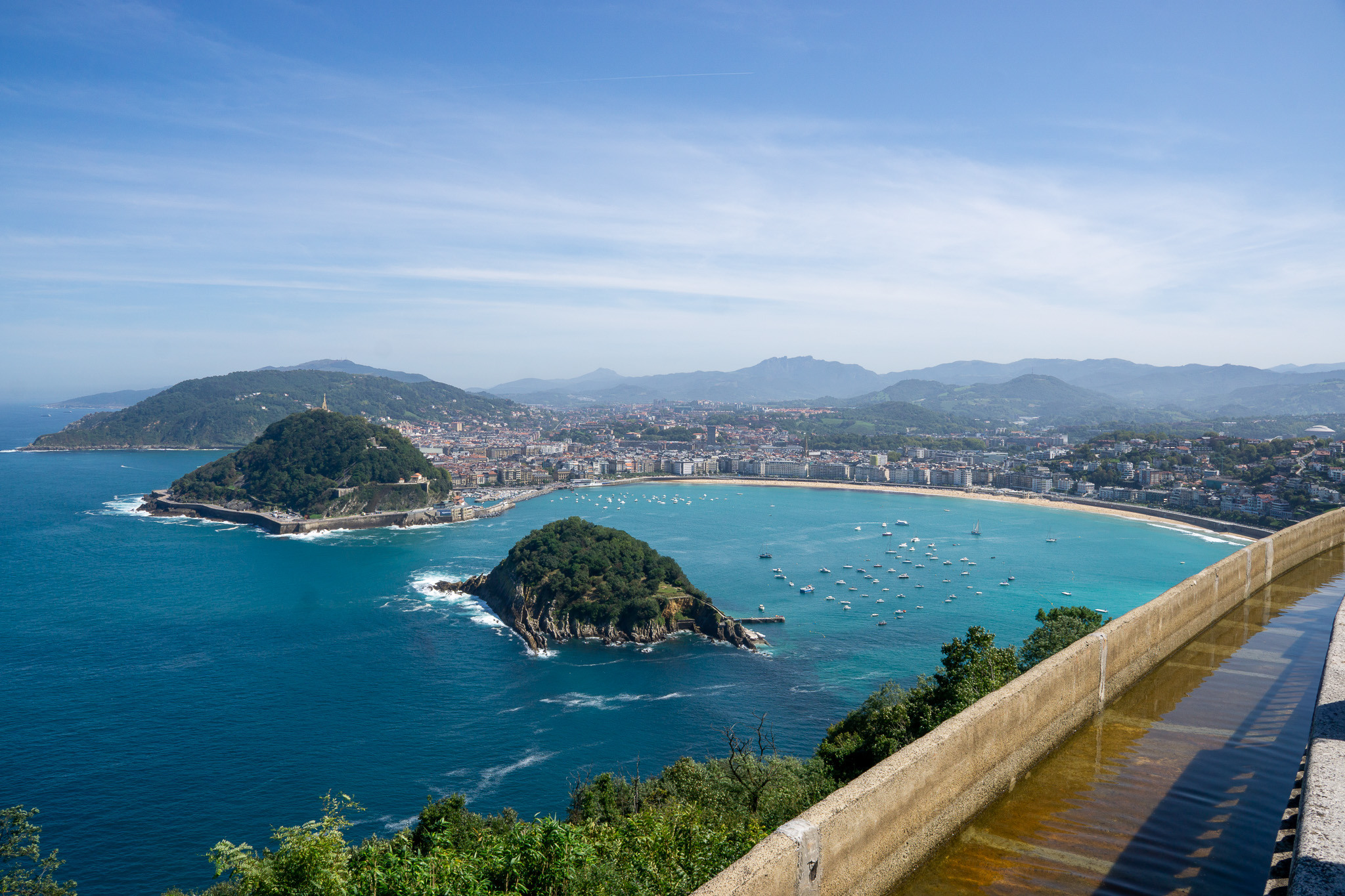
San Sebastián is hands down the most picturesque city in northern Spain, and also one of the most expensive. While it’s easy to overspend at one of the several Michelin star restaurants, visiting this city doesn’t have to break the bank. Aside from the fine dining, the city also boasts easy access to outdoor recreation, beautiful architecture, and historical monuments that justify a visit on their own.
I lived here for two years while teaching English in a nearby town, and got by on a meager teacher’s salary. During that time I learned to take full advantage of the city without spending a fortune.
In this post I’ll go over the free and budget-friendly activities to do, how to get the most out of your money, and give some practical recommendations on when and where to visit.
Best time of year to visit

The ideal time of year to visit San Sebastián is late summer through early fall; the weather is perfect, the rain has mostly subsided, and there are cultural events nearly ever week.
That said, the weather is fairly mild year round and San Sebastián can be enjoyed at any time of year. If you’re a surf enthusiast, winter is an ideal time to visit because that’s when the waves really start pumping. It’s not uncommon to see surfers paddling out to catch waves at La Concha beach where waves are typically small in summer.
As with any tourist town, the costs of traveling go down slightly in the off season. If you really want to save money winter and spring are your best bets for finding discounted lodging. If you do come in the winter, make sure to come prepared with adequate rain gear.
Getting to San Sebastián
By plane
San Sebastián is notoriously inconvenient to reach, but flying into nearby transport hubs and taking a shuttle is usually the best bet. Though the city has a small local airport, the flights are typically expensive compared to flying into the larger airports nearby. These other airports are slightly further away, but in reality they are still quite close.
The most affordable way to get there is usually to fly into Bilbao (BIO) and then take the airport shuttle to the city. The shuttle takes about an hour and fifteen minutes to get from the airport to the city and leaves roughly every hour. The shuttle price varies depending on the time of day, but typically costs around €17.
The second-best option is to fly into Biarritz, France, and take a bus from the airport over to Spain. This route really depends on your city of origin and the flight offerings. There are notably fewer bus connections from Biarritz to San Sebastián than there are from Bilbao. I recommend checking both cities and seeing which one is more convenient.
By train
If you’re planning to combine a visit to San Sebastián with one of the other major cities in Spain, taking the train is another great option. Generally speaking train travel in Spain is only a good deal if you buy the tickets well in advance.
From Madrid it’s possible to take the AVE (high-speed train) for part of the journey but not the whole route. The journey takes anywhere from five and a half to eight hours, with one-way prices costing around €50+ at the lower end and over €100 at the high end. This route is faster than taking the train from Barcelona, but is still pretty slow and expensive compared to flying.
From Barcelona the train ride is long and slow, but it is picturesque. If you have a lot of time or a lot of luggage, this route could be worth looking into. Most routes include a train transfer and take at least six and a half hours. Train tickets for this route start at around €60 but often cost closer to €90.
I have personally taken the train from Barcelona to San Sebastián a few times, and it’s definitely a long one. If you’re traveling with a lot of luggage and have the extra time, these options could save you hundreds in baggage fees compared to flying.
By bus
Bus travel is probably the least comfortable option, but if tickets are purchased in advance it can also be one of the least expensive.
Traveling with companies like Alsa and Flixbus it’s easy to get around Europe. The pros are that most cities are accessible via bus, and the cons are the slow, uncomfortable nature of these trips. Fares can be found as low as €35, or as high as €70.
Riding in a bus can be a little uncomfortable but can save you money if you have large luggage and a lot of time.
By car
The final option for getting there cheaply is to use a ride-sharing app like BlaBlacar. A popular way to get around most of Europe, BlaBlaCar allows users to post upcoming drives they plan to make. The passengers pay a flat fee that is set by the driver, and can arrange a specific drop-off point once they have booked.
While somewhat unconventional, many cities that are difficult to reach using public transit are connected via commuter routes. This choice is worth looking into if all other options are excessively long or pricey.
If you are willing to spend more money for the freedom to travel wherever and whenever you want, cars are also available for rental at the local airports or in the city.
Finding accommodations

Accommodations will likely be your biggest expense in San Sebastián, particularly during peak summer months. Hostel beds in shared dorms range from €30 to €60 in high season, but can be found for €20 to €40 during the off season.
Private rooms in budget hotels start around €60-80 per night but can reach much higher during particular festivities or during peak summer weekends.
Budget hostels
Hostels are typically the cheapest way to jet around most of western Europe. If you are comfortable sharing a sleeping space with a few other people, this is the way to go for most solo travelers.
Though you may be thinking of the simple bunk-bed you slept in as a child, many hostels have come a long way since then. Most hostel beds these days have privacy shades, wall chargers, and some even offer co-working spaces.
A Room in the City
Near and dear to my heart, I lived and worked reception at this hostel for several months on a work exchange.
This centrally-located hostel is one of the largest hostel in the city, built in what used to be a convent. The building offers several small double rooms, several large dorms, a rooftop and an outdoor patio bar downstairs.
Its location near the train station and a short walk from the La Concha beach make this hostel a great choice for budget travelers.
Koba hostel
Perfect for travelers looking for a relaxed vibe, this surf hostel is only a few blocks away from La Zurriola beach.
Located in the Gros neighborhood this hostel offers easy access to hiking routes, beaches and a lively bar scene. Aside from a mix of shared and private dorms, they also offer hourly bicycle, surfboard and wetsuit rentals.
Colo Colo hostel
Right beside the river that runs through downtown, this centrally-located hostel is just a short walk from the train station.
This modern hostel offers 28 pod style beds with their own outlets and privacy screens. This hostel is great for budget travelers looking for a quiet place to stay near the train station.
Budget hotels and guesthouses
If you’re traveling with a partner or significant other, staying in a low-cost hotel can cost roughly the same as staying in a hostel on your own. Even if it does cost slightly more than a hostel the privacy and better rest is usually worth the difference.
San Sebastian DOT Rooms
Located in the heart of the old town, this hotel has several private rooms with shared bathrooms for reasonable prices. The prices can rival the costs of hostel beds in shared dorm rooms during high season, but with more comfort and privacy.
To check prices take a look at this listing that features a detailed photo gallery.
Hotel Ilunion
Only a few hundred feet away from Ondarreta beach, this reasonably priced hotel is located in the Antiguo neighborhood. With updated facilities the hotel has a clean aesthetic and offers easy access to tourist attractions like the Peine del Viento and both beaches on the Bahia de La Concha.
Compare prices via their listing on booking.com
Kontxa Guesthouse
Just a few blocks away from La Concha beach, this hotel offers private rooms with private bathrooms at reasonable rates. The building is located in the heart of the city near both the train station and the beach.
If booked far enough in advance these rooms rival or can even beat the pricing of most hostels in town.
Check prices and photos on their booking.com listing.
Renting apartments via apps like Airbnb or Vrbo
If you’re looking for a bit more flexibility with location and don’t want to deal with noise or crowds, a short term rental could be a good option for you.
For groups of more than three to four people or stays longer than a few days, renting an apartment can actually be more economical than many hostels or hotels.
A two-bedroom apartment in the off-season can be found for around €80-120 a night but provides amenities like a private bathroom, kitchen and living room. If you are planning to stay for more than a few days these savings compound when you factor in the money saved on food costs.
While this reservation style does require some additional planning and back and forth with the hosts, it is definitely worth shopping around when hotel prices skyrocket during the summer months.
Best neighborhoods to stay in
Old town (Parte Vieja)
Centrally located with immediate access to pintxo bars, restaurants, museums and historic sites. The location comes with both good and bad: it’s perfectly located but has loud streets until 2-3 AM on weekends. Ideal for travelers looking for an active nightlife scene that want to walk everywhere.
Gros
This is my personal favorite spot for budget travelers. This more residential neighborhood offers easy access to the surf beach and is only a short walk from old town. There are also a few large supermarkets and dozens of reasonably priced bars and restaurants. Plus, it’s quieter at night which means you can still get your rest.
Centro
The heart of the city, this centrally located neighborhood offers a bit of everything. Tons of bars and restaurants line the streets as well as some smaller shops. Its central location near the beaches and just outside the old town make it an ideal choice for a quieter visit.
Egia
The most affordable neighborhood on this list, it’s further away from the beaches but directly beside the bus station. Perfect for travelers looking for a less touristic vibe who have to catch an early airport shuttle or train connection.
This neighborhood also makes a good option for travelers looking for a longer-term stay, with slightly more reasonable accommodations.
Antiguo
A bit further away from the main drag but also comes at a more reasonable price. Ideal for younger travelers since prices are generally cheaper. It’s also where the university is, so there are plenty of college students and inexpensive bars that cater to them.
If you’re looking for a quieter neighborhood away from the hustle and bustle that’s a little bit calmer, Antiguo is a great option.
Free activities to do


San Sebastián, or Donostia in the Basque language, has plenty of things to do that don’t require spending money. While you certainly can quickly spend hundreds of dollars shopping and eating here, many of the main attractions are free.
Explore the old town of San Sebastián
The old town city center, also known as la parte vieja, features hundreds of small shops along with bars, bakeries, and restaurants. Walking through the narrow streets provides ample opportunities for shopping, dining, and people watching.
The narrow roads are lined with several small eateries serving up Basque cuisine and drinks. It’s easy to spend a few hours exploring the artisan shops and the dozens of pintxo bars.
Aside from shopping and dining there are also multiple museums, churches and historical sites in the old town. The architecture alone is worth a visit, but the lively atmosphere and bars will keep you coming back for more.
Visit one of San Sebastián’s three beaches


San Sebastián boasts three different beaches, each with its own unique vibe. On a sunny day in summer, expect to find dense crowds at all three.
The city has been a beach tourism destination for over two hundred years. The first Spanish royal visits to the city started in the mid-19th century. The royal visits culminated in the building of the Miramar Palace, located directly between La Concha beach and Ondarreta beach.
Playa de La Concha
Located right in the center of town, La Concha is the most popular beach among locals and tourists alike. With smaller waves and its central location, it’s also generally the most crowded. When the sea gets rough enough, typically in winter, you’ll see surfers catching waves here. In the summer you can find swim platforms out in the bay that feature slides pointed into the water.
As this is the most popular beach for tourists, you should also keep an eye out for pickpockets. While there is no violent crime, I would not recommend leaving your things unattended on the beach while you swim. Just have someone watch your bags, take turns swimming and you’ll be fine.
Playa de Ondarreta
Ondarreta beach gets slightly less traffic than the other two beaches due to its smaller size and less central location.
The smallest beach of the three, it’s also on the Bahia de La Concha, but is located in the Antiguo neighborhood. It also makes for a great beach to combine with a visit to the famous Wind Comb monument which sits just west of the beach.
For strong swimmers, it is also possible to swim out to the La isla de Santa Clara from Ondarreta. There is usually a floating platform between the beach and the island. Though this offers a good resting point, only very strong swimmers should continue out to the island.
Overall if you’re looking for a more laid back atmosphere away from the chaos, Ondarreta is your best bet.
La Zurriola
La Zurriola is the famous beach in the Gros neighborhood and offers a more relaxed atmosphere and surfable waves. In the warmer months you’ll see locals sunbathing, surfing and playing beach sports like volleyball. Though the waves are smaller in summer, the strong currents make this beach only suitable for confident swimmers. Heed the lifeguards warnings and only swim in areas marked with flags for swimming.
This beach generally has the strongest waves, and in winter has water often too rough to swim in. Keep a close eye on the swim flags and be sure to listen to any lifeguard instructions.
Watch the waves roll in at the Peine del Viento sculpture


The Peine del Viento (The Wind Comb) is one of the most emblematic symbols of San Sebastián. This famous sculpture was designed by Eduardo Chillida and its construction was completed in 1976.
Powered by the waves crashing into its break wall, the pier has large “blow-holes” built into it. The pressure generated by the sea shoots air up through stone columns, making the boardwalk into an interactive site.
It’s free to visit, and it makes for one of the most iconic pictures from San Sebastián. Located just beyond Ondarreta beach, it’s easily accessible by foot or bus.
There’s also a bar located just beside it with a patio where you can sit and enjoy a drink and a few pintxos. Combine this with a visit to the beach and you have a solid half day of entertainment.
Wander the Miramar palace gardens
Built in the late 19th century for the Spanish royal family, this palace acted as a summer retreat for Spanish royalty. The palace, based on designs from English architect Selden Wornum, features a mixture of brickwork, plaster, and the classic timber framing.
The manicured lawns offer perfect picnic spots and photo opportunities with views of the bay. If you’re looking for a quiet escape right in the center of the city, the Miramar palace is an excellent option.
The palace gardens are now open to the public, open daily from 7:00 AM to 9:00 PM. A visit to the Miramar gardens could easily be combined with a trip to the Wind Comb or Ondarreta beach.
Climb up Monte Urgull and watch the sun set over the city


The lookout near the top of Monte Urgull is one of the best places to watch the sun set over San Sebastián.
If you have a few hours, the walk up the mountain is steep but worth the effort. At the very top sits the statue of Jesus visible from all around the city. There’s a small historical museum on the way up that has access to the lookout. The museum features image galleries of San Sebastián throughout its history and details about its military fortifications.
About two thirds of the way up the mountain, a bar with an excellent patio serves drinks. I recommend having a drink on the patio, but if you’re low on cash you can also go watch the sun set from the gardens above for free.
Watch entertainers along the Paseo de la Concha
On any summer day, walk along the boardwalk above La Concha beach and you’ll see many buskers and entertainers performing.
Typically several different entertainers can be seen creating works of art or playing music. The sand artists that lay out huge grid-designs are some of my favorites.
Budget friendly or low cost activities in San Sebastián
San Sebastián offers easy access to outdoor recreation, a vibrant cultural scene and world-class restaurants.
Most of these activities can be done within a reasonable budget that will make your trip to the Basque Country unforgettable. Fortunately the city hosts several free street fairs throughout the year, and most of the outdoor activities are relatively inexpensive.
Surfboard / wetsuit rental

The surf beach located directly in the city is one of the primary draws to San Sebastián. One of the first European cities to embrace surfing, surfers have been coming to the city since the 1960s.
For around €35-45 it’s possible to rent a surfboard for a few hours, with longer rentals options available. Some shops combine the wetsuit rentals with surfboards, while others charge a separate fee. If you plan to surf for more than an hour I would absolutely recommend getting a wetsuit. The water in the Bay of Biscay is cold, and even in summer most surfers wear a wetsuit.
Generally speaking the surf is bigger in winter, and the smaller summer waves are better for beginners. When renting a surfboard ask at the counter about the surf forecast if you haven’t already looked.
In the summer months just stop by one of the surf shops in the Gros neighborhood like Pukas or Hawaii Donostia. They offer rentals of all different types of boards from an hour up to a week.
If you want to take classes, the Groseko Indarra Surf Eskola offers packages that combine surf lessons with surfboard and wetsuit rentals.
San Telmo Museum

The San Telmo Museum features displays on both ancient and modern Basque culture. Located right in the center of old town just below Monte Urgull, it’s an easy addition to a short itinerary.
The building itself features a 16th-century cloister with beautiful stone arches. General admission costs €10, with free admission every Tuesday and on certain holidays. For discounted rates check the full list of holidays and opening hours on their website.
Bike rental
San Sebastián features a system of bike lanes that connect the different parts of the city. The route also connects to nearby towns and mountain biking trails.
A bike rental can speed up your sight-seeing but depends on having good weather. If you’re interested in biking I would suggest waiting until you have a clear weather forecast.
That said, the city has several miles of bike lanes and is intuitive to navigate. While winter is the rainier season, even in the spring and summer it’s not uncommon to see long stretches of rain.
For those who really enjoy cycle tourism, there’s a 50 km circuit around the city. The “Vuelta a Donostia” circles the mountains and offers views of several iconic locations.
If you luck out with your travel dates, renting a bike can help you see more parts of the city. But just be warned that in winter and spring the rain can be brutal.
Pasaia coastal hike


Accessible directly from the Gros neighborhood, this hike is part of the Camino del Norte route and is an absolute classic. When I lived here I would often take visitors for a day trip and get lunch and drinks in Pasaia.
The way is well marked, and the 5.5-6 mile (8-9 km) hike takes approximately three to four hours to walk. I would factor in some extra time for stopping to take photos and to enjoy the views.
The first few hill climbs are very steep, but most people in good physical health should be able to handle it without issue. As with any hike, I recommend taking some water and snacks with you in a backpack.
To get back to San Sebastián, take the E09 bus from Pasaia back to the city. The local bus has various stops along the way and you can get off near wherever you’re staying. Single bus rides cost €1.85, or slightly less with a local transit card.
*Make sure you have euros since the buses only accepts cash payments or the local travel card!
If you’re interested in learning more about the route that this is a part of, check out my post about the Camino de Santiago. To read about my hike along this section of it, check out my post on the first day of the Camino del Norte.
Monte Igueldo theme park


Located at the far end of La Concha Bay, Monte Igueldo theme park features several rides as well as a funicular from the early 20th century.
The funicular ride itself is worth the small fee, and only costs €4,50 for adults, and €2,50 for kids. Make the trip on a clear day for a panoramic view of the city and to check out the rides. Admission to the park is included in the funicular fee, but each attraction also charges its own fee. I would highly recommend the roller coaster ride which is short but features great 360 degree views.
There is also a bar at the top with reasonably priced drinks that offers views of the surrounding countryside. On a sunny day this is an excursion with great views that should only set you back a few euros.
Dining on a budget
Famous for its pintxos scene, most restaurants have an offering of pre-made food that sits on the bar top. Eating strictly pintxos can get pricey but compared to the US it would still make for a pretty cheap night out.
The availability of high quality dining in the city makes even the budget eateries step up their culinary game. So while it may not be the cheapest city to dine in, even the inexpensive meals should be memorable.
In this section I’ll cover a few ways to save money on food and some of my personal favorite budget eateries.
Visit el mercado de La Bretxa
This market offers local fruit, vegetables and meats at reasonable prices. Aside from being an opportunity to interact with some locals, it’s also located in the center of historic old town.
If the food seems a little expensive, there is a budget supermarket, Lidl, located directly beneath the market. I would suggest buying a few things at the market and then some complementary groceries from Lidl.
Pintxopote in the Gros neighborhood
The Gros neighborhood hosts an event every Thursday night called pintxopote, offering inexpensive drink and pintxo specials. Starting around 7 p.m. the bars start to get crowded and eventually the crowds spill out onto the streets. If you’re looking to get some cheap food and drinks and happen to be in town on a Thursday, Gros is the place to be.
A portmanteau of two Basque words meaning “tapa” and “drink,” pintxopote is a longstanding tradition that attracts people from all around the city. The restaurants get crowded quickly and most bars in Gros offer a food and drink combo for only a few euros.

Generally they’ll let you get your drink and food and head out onto the crowded terraces and sidewalks. By about 9 p.m. the streets in front of bars are generally full of young people. Pintxopote is popular among college-aged people for its cheap prices, but all ages are welcome.
Restaurant recommendations
San Sebastián is world famous for its dining scene, and there really are too many restaurants to mention. Instead of compiling a list of the best ones, I’ll include a few of my favorite local classics.
Juantxo Taberna
If you’re seriously hungry and want a large, affordable sandwich, Juantxo is the spot.
I was actually hesitant to share this one because this is my go-to budget restaurant in San Sebastián. It’s almost always packed, and their massive sandwiches are both inexpensive and filling. While they offer several different dishes like patatas bravas or txipirones, getting a sandwich to go is my personal favorite.
Located in the center of old town, this is a classic stop before a night of bar hopping. If you want an essential Donosti experience, get a sandwich to go and eat it on top of Monte Urgull while watching the sun set.
La Viña cheesecake
If you have done any research on famous food from San Sebastián, you’ve almost certainly heard about this Basque cheesecake.

What you may not have heard is that they have recently opened a secondary kitchen down the street. This second location bakes the exact same cheesecake, but exclusively serves it to-go.
While it’s an experience in itself to go to the original restaurant, the crowds can be overwhelming in summer. If there’s a line out the door, just get the cheesecake to go and enjoy it somewhere else.
Papperino Izozkiak
This artisanal ice cream shop located in Gros has arguably the best ice cream in San Sebastián. The place itself is tiny, with a single counter and only a few meters of space in its lobby.
When it’s open it’s not unusual to see a line out the door and people standing or sitting outside. If you get the chance, try their pistachio ice cream with a scoop of dark chocolate and thank me later.
Mala Gissona Beer House
Located in the Gros neighborhood, this is one of the few craft beer breweries in town. In the last few decades craft beer has grown more widely available in Europe, but the available beers at bars are still pretty limited.
If you’re looking for a good locally brewed IPA or a stout on tap, Mala Gissona is a must visit.
Txuleta
It would be a shame to come all the way to San Sebastián and only eat pintxos and supermarket food. Be sure to set some funds aside to splurge at at least one of the many legendary restaurants around town.
The meal below is from Txuleta, a restaurant in Parte Vieja during my last trip there. Between three of us we split a plate of chorizo iberico, stuffed peppers, and a massive steak with fries.


To give you an idea of the costs, our dinner split three ways cost around €40 per person. This was a splurge by budget travel standards, but excellent value for the quality. That price included the two appetizers and a large steak split three ways, fresh bread, a bottle of mineral water, and two drinks per person. Not bad for some high-quality dining.
To be honest, on my last trip I spent most of my food budget visiting my favorite pintxo bars. But it was nice to spend an evening out getting a proper sit-down meal.
When in doubt, find the crowds
It’s hard to go wrong when dining out in San Sebastian’s old town. Typically you’ll just need to wander the streets for a few minutes to see where people are lining up to order food. If the crowds are spilling out into the alley, it’s usually for good reason.
As you can tell from the photos below, my friends and I did not go hungry on this trip. The platter on the left is from an outing to a nearby city, and the plate on the right shows the famous sea urchin (erizo de mar) pintxo from Bar Sport in the parte vieja.


Music and Nightlife
Like the rest of the country, San Sebastián has a strong bar and cafe culture. On any given day of the week cafes are buzzing with people drinking coffee, beer or wine and chatting with friends.
The nightlife is equally lively here, though things happen significantly later than they do in most other countries. It’s not uncommon for locals to eat dinner around 10:00 p.m., and to casually leave for the bars around eleven or even later.


Where to go out in San Sebastián
The most lively places to go out in San Sebastián include old town, Gros, and Reyes Catolicos. El Antiguo and Egia also have good bar culture, but are slightly further from the center of town.
Each part of the city has its own distinct atmosphere and will be more lively depending on the time of day. Generally speaking old town stays open the latest, the Gros neighborhood is great for more relaxed drinks, and Reyes Catolicos has a lively patio scene on the weekends.
Music venues and clubs
Due to the large number of tourists that flood the city in summer it is also generally the best time for entertainment. Many musical acts also come to San Sebastián on their European tours, particularly for the Jazzaldia festival in the summer. Even if you don’t go to see any of the main shows, many of the acts play at clubs around town.
It is important to note that due to noise ordinances live concerts generally happen much earlier than one would expect.
Altxerri
A jazz bar located in the center of old town. This underground club features a cozy vibe and a small stage in the corner where they host intimate concerts. The concerts generally happen early due to noise ordinances but the club stays open late.
Be! Club
Just a few streets over from Altxerri, Be! Club is another old town venue that features live music. Aside from the live music, this bar also keeps late hours. Open most days until 5AM, this club offers live music early in the evening and a club scene after midnight.
Check their website for concert updates and official operating hours.
Le Bukowski Taberna
Located near the train station in Egia, Le Bukowski hosts concerts from rock, funk, and soul to DJ sets. Slightly off the beaten path this bar also stays open late. Check their website for upcoming shows and opening hours.
Dabadaba
One of the more popular late night venues in the city that attracts international acts from around Europe and beyond. This venue is located in the Egia neighborhood and generally stays open late on weekends. For hours and upcoming events, check their website.
Bataplan
This bar is located directly beside La Concha beach, and is more of a club scene. Bataplan is open later most weekends, and features a patio with great views of the beach.
Drinks here are expensive (€10-15), but if you’re looking for a dance club this is one of the more popular places in town.
El Club Etxekalte
Located in old town, this is another club that stays open late. Although the bar itself is small, they do occasionally host live music or DJ sets. On busier nights people tend to congregate out on the street in front of the bar.
If you’re looking for a place at the heart of the old town to get a drink and meet some people, Etxekalte is worth a visit.
San Sebastián FAQs
Here are some of the most common questions that people ask about visiting San Sebastián on a budget, ranging from logistics to cultural norms.
How much does a trip to San Sebastián cost per day?
A budget traveler should expect to spend anywhere from €85-120 per day during the high season, and in the off-season travelers can expect to spend closer to €65-85 per day. These expenses are primarily influenced by the price of lodging.
Hostel prices go way up in summertime, with beds in shared dorms costing as much as €50 per night. Slow season travel sees prices reduce slightly, with beds averaging closer to €35 per night. Hostels in the city center cost more, with cheaper options available in the outer neighborhoods like Antiguo.
During high season it can actually sometimes be cheaper to book an Airbnb or Vrbo if you can find a good deal. This requires some more planning but if you have a large group it can save you a lot of money.
Where should I stay in San Sebastián?
Staying in either the Gros neighborhood or the city center are my top two recommendations. While staying in the old town might be the most picturesque, it can get loud at night.
These centrally located neighborhoods balance easy access to surf beaches, tourist attractions and entertainment without being surrounded by the crowds of old town.
How much does it cost to eat out in San Sebastián?
Costs for dining out vary wildly, but I would budget at least €35 per day for food and drinks.
For travelers on a tighter budget, a typical set lunch (menú del día) averages around €15-18. This usually includes two courses, dessert, a drink, and bread. Restaurants with set lunches typically show the available options on a chalkboard and let you choose the combination.
Dinner generally costs more than lunch, and on average falls between €20-30 per person including drinks.
With several Michelin star restaurants in the area, the sky is the limit when it comes to food and drink. By combining supermarket food, some set lunches and a few dinners out, San Sebastian can be a reasonably priced culinary destination.
This plan assumes eating breakfast from supermarkets (€3-5) and having one or two restaurant meals daily. If eating out for all three meals, budget €40-50.
How much does it cost to go out in San Sebastián?
A typical night out in San Sebastián can cost anywhere from €15-40 depending on your tastes and where you go.
Drinks in San Sebastián are generally inexpensive, costing around €2-5 each on average. Generally pintxos cost about the same, making a night of drinking and some light food affordable.
Is tipping expected at restaurants in Spain?
Tipping in most parts of Spain is not expected, but it is appreciated. You can round up bills or let them keep the change, but there’s no set expected percentage. In regions that cater more to tourists some restaurants may add gratuity into the bill, or expect a small tip.
Should I rent a car for my visit?
If you intend to stay in the city then renting a car is really not necessary. If you’re confident navigating public transit then getting to and from San Sebastian is pretty simple.
If you plan to visit some harder to access tourist attractions such as particular hikes, or if you don’t want to wait for public transit, then renting a car could be worthwhile. Just be sure to confirm that where you are staying has parking available.
Practical tips for visiting

Weather
When visiting San Sebastián, always be prepared for rain and cooler temperatures. While summer tends to be warmer and dryer, there’s never a guarantee.
In winter expect significant rainfall on most days, with lighter showers during the spring months. Early summer to mid fall sees the driest weather with mild but pleasant temperatures.
ATM availability
ATMs are widely available around the city, though in recent years Spain has moved towards using cards. Almost all stores or restaurants have card readers and may actually have trouble breaking larger bills. I recommend bringing no more than €100-200 in bills no larger than €20.
During my last trip there I used a VISA card everywhere and had no issues with any payments.
Basque vs Spanish identity
San Sebastián, or Donostia in the local language, is one of the main cultural centers of the Basque Country. You’ll see it written both ways all around the city but they both refer to the same city.
The relationship between the Spanish and Basque has improved in recent decades, but do not confuse the two. The Basque people have their own language and cultural identity, and they generally do not consider themselves to be Spanish.
Though the Basque separatist group (ETA) turned over their weapons in a 2017 peace agreement, there is still a strong separatist mindset in the region. You’ll hear Basque spoken on the streets and see most signs written in Basque before Spanish. Learning a few Basque words will help make the locals more forgiving in your interactions.
Language considerations
The level of English in the city is decent, but do not expect a high level of proficiency once you leave town. Some signs will be posted with details in English, but most locals only have basic proficiency.
If you plan on venturing out into the countryside I would suggest learning some basic Spanish or at least downloading some quality translation apps.
Vaccinations and drinking water
No special vaccinations are needed for a visit to San Sebastián. I also get asked often about the drinking water, but the tap water in San Sebastián is perfectly safe to drink.
Many locals and tourists still prefer to buy bottled water which you can find at any supermarket or frutería around town. While some people find it tastes better, it is not necessary in this part of Spain.
Travel insurance
If you’re traveling from outside the EU and don’t have coverage in Spain, a general travel insurance policy is advisable.
Final thoughts
This article barely scratches the surface of things to do in San Sebastián, but it’s a start. I hope it gives you a better idea of what you should expect to spend here, and helps you realize that it can be an affordable travel destination.
Did I miss anything major? Drop a comment down below with your questions, recommendations, or tips that I didn’t mention.
Leave a Reply