
Fair warning: Copenhagen is expensive. This guide is about enjoying your visit while keeping your savings intact.
I had been traveling for well over a decade before I finally had enough money saved to comfortably travel to Denmark. Copenhagen is notoriously expensive, even by European standards, but with careful planning and some well-timed flight deals, it is possible to visit without spending a fortune.
I spent a total of five days in Copenhagen in September of 2025, when the crowds of tourists were mostly gone but the weather was still ideal.
Quick Facts
Daily budget: 700-1080 DKK (~$110-170)
Best times to visit: May through June, September through early October
Recommended Stay: 3-5 days
Language: Danish (English widely spoken)
Currency: Danish Krone (DKK) – cards accepted everywhere
In this post I cover the free and budget-friendly activities to do in the city, touch on some transport tips, and advice for how to keep expenses low.
Best time to visit Copenhagen
The best time to visit Copenhagen for budget travelers generally falls on either side of the high tourism season. This means from May to June before summer travel really picks up, and from September to early October as summer travel is winding down. Accommodations will generally be less expensive then, and the attractions will be less crowded.
Summer (late June-August) offers the warmest weather, but prices will be higher. As international travelers pour into the city, prices generally increase and tourist attractions can become overcrowded.
Winter is the cheapest time for flights and accommodations, but the city will be dark and cold. While some expenses drop slightly, the inability to enjoy parks and outdoor spaces will drive up other costs. If you can find a cheap flight then it could be worth a visit to the Christmas markets and combine it with a northern-lights excursion.
If possible, avoid late November to early December before the Christmas markets have started. Though prices should be more affordable than in the summer, the short days and colder temperatures make it less attractive for tourism.
Getting there

Copenhagen has one of the largest major airports in Europe (CPH), which makes air travel here surprisingly affordable. Just be sure to factor in the rest of your expenses before you buy the flight, because it may well be the only affordable thing about your trip.
To get from the airport to the city, take the M2 Metro line which should take roughly 15 minutes and cost around 36 DKK, or a little less than $6. There are also several trains heading to Copenhagen from Sweden and beyond, and it’s possible to catch one of those into the city as well.
Alternatively, there are also buses that run from the airport to the city center that run 24/7. Bus 5C leaves regularly from the Copenhagen Central Station (Hovedbanegården) and arrives at the airport in roughly 35 minutes.
For context, my round trip flight from Detroit was $549 with a short layover in Iceland. This was part of a larger trip where I met up with friends in Spain, all nestled within this itinerary. If you’re interested in reading more about flight hacking, check out my post on finding the best deals on flights.
Where to Stay on a budget
Staying in Copenhagen is expensive, but if you plan your trip carefully it is possible to keep the costs down. Expect to pay at least 250 DKK (~$40) a night for shared accommodations, or maybe slightly more per person in a cheap private room shared with a partner. Rates vary wildly between seasons, so really do your research before making any plans.
Hotel recs
For a simple private room in the city center, I’d recommend at the Motel One Copenhagen.
Located directly downtown beside Copenhagen city hall, this hotel offers private rooms at reasonable prices. While deals can be found, during the travel season the prices can double.
Hostel recs
Generator
This trendy downtown hostel features a mixture of room types, ranging from eight-bed dorms to private rooms with king-sized matresses.
Located directly beside Kongens Have, Generator hostel is walking distance from nearly every attraction in the city. Aside from the prime location it also features several communal areas, including a patio and a bar.
Steel House
Another massive complex, this budget-friendly hotel is closer to the main train station but is still incredibly close to the major attractions.
I stayed at Steel House Copenhagen with a friend on my autumn 2025 trip and I couldn’t have been happier. They offer an inexpensive (for Copenhagen) breakfast which is a great option to get your day started. Between the shared kitchen, work spaces, game nights and bar this hostel had everything most travelers would need at an affordable price. That said, they do upcharge for using most of their facilities so keep that in mind.


Overall I was very satisfied with the central location of the hostel, and the clean amenities. The dining and cooking area downstairs and communal workspaces make this hostel ideal for digital nomads or travelers looking to socialize.
Renting an apartment
For groups of 3-4 or stays longer than a few days, short-term rentals can actually be economical. Two-bedroom apartments run 800-1500 DKK (~$125-235) per night depending on season and location. Airbnb and Vrbo have good inventory, but book 2-3 months ahead for summer for the best deals.
Central Neighborhoods
The majority of the tourist attractions are located in the city center, but there are a number of outer neighborhoods that have their own charm. Whether you’re looking for deeper integration in a less touristy area or you’re searching for lower prices for a longer stay, it’s hard to go wrong in Copenhagen.
Nørrebro
A multicultural, youthful district known for its street life, indie cafes, and creative energy. Ideal if you want a less touristy, more local experience with excellent food diversity and easy bike access to the rest of the city.
Best for: Budget-conscious travelers, food lovers, and those seeking a local, alternative vibe.
Vesterbro
Once gritty this is now one of Copenhagen’s trendiest neighborhoods, packed with stylish restaurants, boutiques and nightlife. Great for travelers who want a lively atmosphere while staying within walking distance of the central train station and most major attractions.
Best for: Travelers looking for nightlife, first-time visitors, and travelers looking for a trendy, social scene.
Copenhagen City Center
The historic heart of the city, home to major landmarks, shopping streets, and cultural sites. Staying here maximizes convenience, but comes with higher prices and heavier tourist traffic.
Best for: Sightseeing efficiency, short stays, and travelers prioritizing proximity over budget
Island Brygge
A relaxed, waterfront neighborhood known for its harbor baths, modern apartments and scenic walking paths. It’s a strong choice if you want a quieter stay with easy access to swimming areas and quick bike or metro connections to downtown.
Best for: A quieter stay, summer visits, and travelers who want waterfront access without being far from the city center.
Free Things to Do in Copenhagen
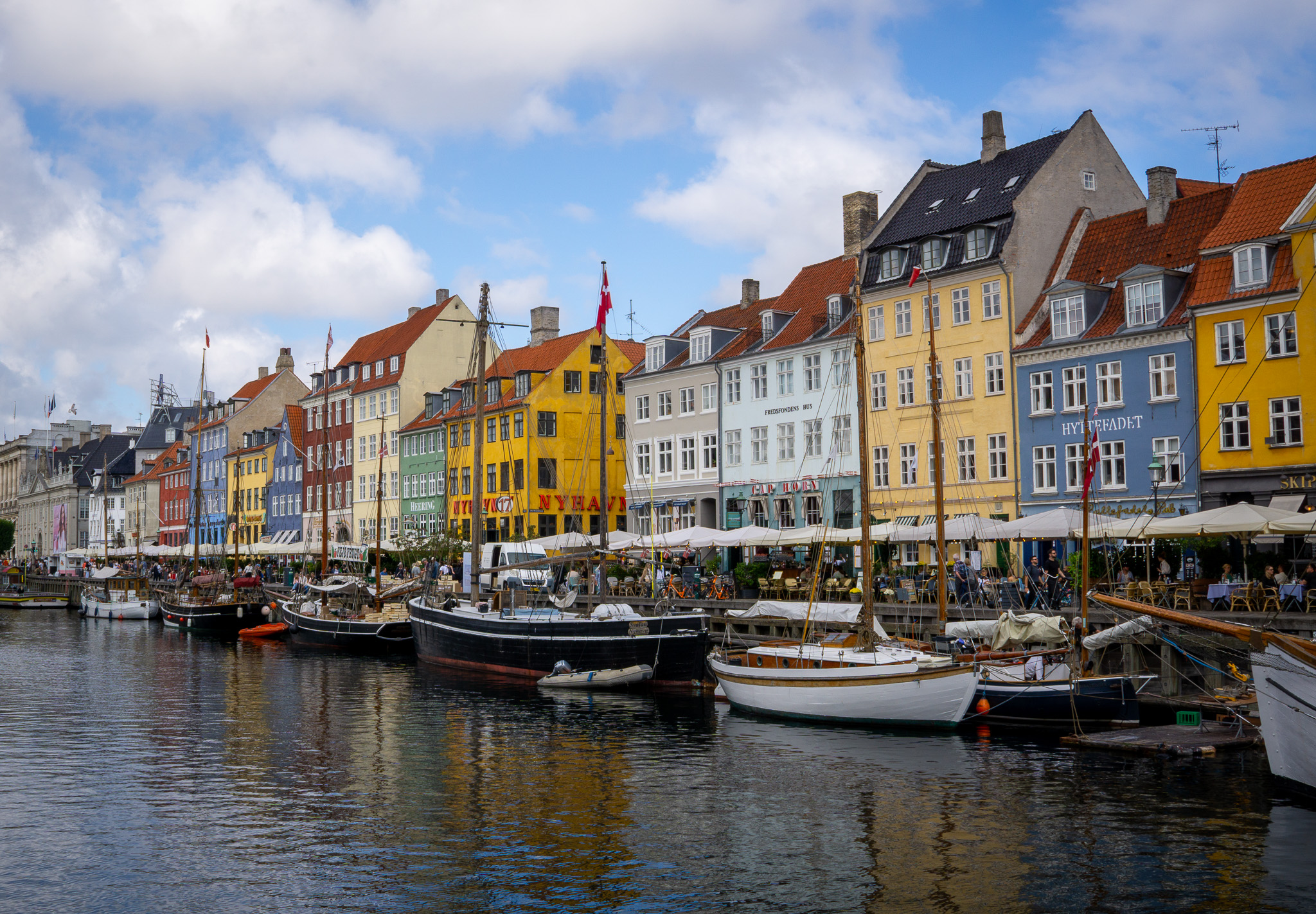
Walk the Nyhavn harbor

Perhaps the most iconic location in all of Copenhagen, a visit here is an absolute must. The brightly painted houses along the harbor make for some great photo opportunities. I didn’t end up going for a boat ride, but in hindsight it probably would have been worth the money.
If I could do my trip over again, I’d start out with one of the less expensive boat tours to get an overview of the city and see where the major landmarks are. While it’s stereotypically “touristy”, there is really no faster way to get an understanding of the city’s geography. Plus, it lets you speed-run some of the major attractions so you can reassess your itinerary and adjust accordingly.
While this area does have some of the most famous photo opps, it is incredibly expensive. For travelers on a budget, I would not recommend eating here. Instead, walk a few blocks over to Broens Street Food, a reasonably priced outdoor food market that offers excellent views of the city.
King’s Garden (Kongens Have)

This beautifully manicured garden at the center of Copenhagen sits right next to Rosenborg Castle.
My friend and I spent some time wandering the park and combined that with a stroll around the Rosenborg castle grounds. While the tour of the building costs 140 DKK, walking around the building and checking out the gardens is free.
Rosenhaven
Located directly beside the King’s Garden is the famous Rosenhaven. This small curated rose garden features beautifully arranged plants and the famous statue of Queen Caroline Amalie of Denmark. This monarch lived from 1796 to 1881 and is commemorated in bronze.
The garden itself is quite small, but the famous statue is worth taking a picture of and is easily combined with a visit to Rosenborg Castle Gardens. Benches along the edges of the park also make this an ideal spot to take a break.


Explore Freetown Christiania
Freetown Christiania is one of the more off-beat attractions in Copenhagen. Located in an abandoned military barracks near the center of the city, what started as a hippie and squatter project in the 1970s has become more friendly to tourists in recent years. Attractions include unique architecture, extensive graffiti murals, a skatepark, and a few bars.


Though it is open to the public, this self-governed community is home to some 800-1000 people. Either BYOB to the central area with picnic tables and hang out, or you can buy drinks at one of the bars there.
It is not generally recommended to travel here alone at night based on the area’s past connections with organized crime. Though it’s widely considered safe, its checkered history means that it is best to exercise caution when visiting.
Walk the harbor waterfront


If the weather is nice, the walk from Nyhavn to Refshaleøen is well worth doing. You’ll see tons of modern architecture, pass by a few swimming spots and end up at the trendy food-truck spot, Reffen.
If you’re already renting a bike there are great bike paths that follow along it. Just be sure to follow the traffic laws and be sure to lock your bike up whenever you stop.
Watch the Changing of the Guard at Amalienborg Palace
Much like the changing of the Guard at Buckingham Palace in London, a formal ritual marks the guard shift change every day.
A crowd of tourists gathers each day to witness the ceremony, which has occurred daily since its introduction in 1658. The Royal Life Guard (Den Kongelige Livgarde) leave from Rosenborg Castle at 11:30, ending in front of the palace around 12:00.

The official guard change happens each day at Amalienborg Palace at noon, but you’ll want to arrive early to make sure you get a good view. Crowds of tourists line up to watch, and especially if you’re traveling with children you’ll want to stake out a good spot.
Superkilen Park
This public park in the Nørrebro district features some interesting examples of street art. Part of an urban improvement initiative, this neighborhood has put in a lot of work to improve its image in recent decades, mostly by improving communal spaces.
If you rent a bike it’s worth stopping by for the photo opp and to check out some of the award winning street art and sculptures.
Assistens Cemetery
This large cemetery sits in the center of Copenhagen is where several famous Danes are buried. Located in the Nørrebro district, it also provides a large greenspace in the middle of the city. If you have some extra time and feel like walking or want to escape the sun, Assistens is well worth a visit.
Famous individuals buried here include Hans Christian Andersen, philosopher Søren Kierkegaard, and physicist Niels Bohr. For a complete list of notable Danes buried here, check out the wikipedia page.
Frederik’s Church
Frederik’s Church (Frederiks Kirke) is an Evangelical Lutheran church located just a short walk from the city center.
Accessing the sanctuary is free, though climbing the dome costs 50 DKK. Note that it’s only possible to go up the dome at specific times (Saturday and Sunday at 1:30 PM) on a guided tour. If you’re interested in the tour, make sure to show up early as they offer tours to a maximum of 15 people at a time.


If you can’t make the tour don’t worry; I found the view from the slightly taller Church of Our Saviour well worth the money. Though it’s a totally different experience, the more flexible opening hours make it easier to add into busy sightseeing schedules.
Swimming in the harbor
This was actually one of the most memorable activities on this whole trip. Copenhagen has water clean enough to swim in, and there are several swim spots scattered around the city. We stopped on our way back from Reffen food market for a quick dip and a beer.
Walking around the city there are several spots where you can swim in the Øresund strait. Most of the spots have the boundaries roped off, but not all swim spots have lifeguards on duty. Expect to see crowds of people swimming on any warm, sunny days. Lastly, make sure to bring your own towel, and come mentally prepared for the cold water.
Fortunately the sun was out when I swam at “La Banchina”, the small swimming spot located near the Reffen food complex. For a list of the top swim spots in Copenhagen, check out this BBC article.
Budget-Friendly Activities
Church of Our Saviour
The Church of Our Saviour (Vor Frelsers Kirke ) was built in the 1680s and offers one of the best viewpoints to see the city.
The staircase that leads up to the roof features several old photos and notes about its construction, offering insights into the building’s history.


The church tower reaches 90 meters (295 feet) in height, and on clear days gives 360 degree views of the Copenhagen skyline. The views are great, but the top of the tower is relatively exposed so it is not recommended for travelers who have a fear of heights.
Entrance to the church costs 70DKK (roughly $10) and only 20DKK for kids under 14, granting you access to the viewpoint upstairs. Climbing the tower is worth the money as long as the weather is good and the skies are clear. The views of the city are incredible and climbing up the narrow staircase is an experience in itself.
Torvehallerne food market


This food market has everything from fresh produce to local meat and dairy, as well as artisanal products.
Arguably the best cup of coffee I had in Copenhagen was the flat white that I got from the Coffee Collective Torvehallerne. I paired it with a cardamom braid (Kardemommeflet) and it was worth every penny. I had a layover in Copenhagen on my way home, and I actually rushed back to Torvehallerne just to get another coffee and pastry.
Boat tours of Nyhavn
One super-touristy thing that I wish I had done was taking one of the boat rides that leave out of Nyhavn. Though it may seem a little kitschy, taking a boat tour is one of the easiest ways to get a feel for the layout of the city. You won’t only learn a bit about the city in the process, you’ll also get an overview of the main tourist attractions. Getting a feel for the city can help revise and improve your plan for your trip so you don’t miss anything you find interesting.
The Netto-Bådene takes off from Nyhavn and requires no reservations, you simply walk up and book at their booth. The ride costs only 80 DKK (~$12.50) per adult and 40 DKK (~$6.50) per child.
The least expensive tour starts at around 60 DKK (~$9.50), with prices going as high as 650 DKK (~$102) for a private group tour.
*If you decide to spend the money for the Copenhagen Card, some boat tours are included in the price
Reffen Street Food market


Located at the end of Refshaleøen peninsula, Reffen is an outdoor street food market with dozens of international food stalls. My friend and I sampled several cuisines and ate under a shaded canopy beside the skatepark. Beyond the food, there are coffee stands, cocktail bars, and a large Mikkeller beer hall—perfect for a relaxed afternoon by the water


Louisiana Museum of Modern Art
The most famous contemporary art museum in Denmark, this museum is about an hour outside of Copenhagen using public transit, or a 40 minute drive if you rent a car.
Standard adult tickets cost 145 DKK (~$22), or slightly less with a student discount. If you’re interested in spending a whole day out of the city, this could be combined with Kronborg Slot, the castle that inspired Elsinore in Shakespeare’s Hamlet.
Check out the museum’s website for exact details on opening hours and the exact details on all different tickets.
Rent a bike

This city is internationally renowned for its cycling lanes, and for good reason. Copenhagen is built for cycling and can significantly drive down your transit costs on your trip.
Biking can be one of the most cost-effective ways to get around the city, particularly if you rent for multiple days or use one of the app-based city bikes. As I warned earlier, be sure to lock your bike up when you stop, as bike theft is one of the most common crimes reported in Copenhagen.
National Museum of Denmark
The National Museum of Denmark is one of the best cultural stops in the city, covering everything from Viking history to medieval artifacts and modern Danish life. The museum is an excellent low-cost activity for travelers who want a deeper understanding of Denmark, and a perfect option for a cold or rainy day.
Tickets cost 150 DKK (~$23) or 135 DKK (~$21) if you buy online.
The museum is centrally located, and easy to pair with a walking day in the city center.
Eating on a Budget in Copenhagen
Daily food budget: at least 250-400 DKK (~$40-62) per person, or significantly more if you’re a foodie.

This is where Copenhagen really starts to show how expensive it can be. The coffee and baked goods in this city are incredible but with prices around 40+ DKK for a coffee and anywhere from 30+ DKK for a sweet treat, you can run up a massive bill very quickly.
The best way to save money on food is to buy some supplies for breakfast to prepare at your hostel, and make some snacks or lunch to take with you. I personally did most of my shopping at Netto and Lidl, which are discount grocery stores that also both have a pretty decent bakery selection. You’ll most likely be on the go anyway, so buying more affordable groceries for the daytime and splurging on dinner should feel pretty natural.
Most days I averaged around 300-400 DKK which included supermarket breakfast and lunch, a few coffees while we walked around the city, and a nice meal in the evenings. It is of course possible to do it for less, but I found this to be a good balance. If you’re a foodie, then budget a little more, because their baked goods are on another level.


One final note – In Denmark it is perfectly normal to drink a beer in the park, so if the weather is nice, save your money and skip happy hour. There are plenty of convenience stores scattered throughout the city, and they all should have a few beers or ciders to choose from. My friend and I spent one beautiful afternoon drinking in Ørstedsparken, and it is one of my fondest memories from the trip.
Getting Around the City
Copenhagen is one of the easiest cities in the world to bike around due to their heavy investment in bike infrastructure. Copenhagen famously has more bikes than cars, and over 60% of its residents commute to work or school via bicycle. Though the bike lanes are great, the city is easy to navigate whether you’re on foot, on two wheels or riding public transit.
Metro / Bus / Train
For most travelers buying single tickets is the cheapest way to get around the city. If you plan your day right, one or two metro rides should have you completely covered.
A single ticket costs 24 DKK (~$3.75) for 2 zones, and are valid for one hour. A 24-hour pass will run you 130 DKK (~$20) with unlimited metro rides. The Copenhagen Card includes metro travel but costs 599 DKK (~$93) for 24 hours, which is quite expensive. Though the pass includes transport and entrance 89 attractions, getting your money’s worth can prove to be difficult.
The Copenhagen City Pass is really only worth the money for travelers who are trying to fit in as many activities in one or two days as possible. Unless you have a really packed itinerary, buying single rides will overall save you a lot of money.
Bike rental
Riding a bike is a popular way that locals get around the city, as evidenced by the hordes of bikes parked along the streets. Just be warned that they take biking pretty seriously, and they expect tourists to obey the traffic laws. If you’re a competent cyclist you shouldn’t have any issues, just be aware of your surroundings and respect other cyclists on the road.
Many hostels and hotels offer daily bike rentals, averaging around 100 DKK to 175 DKK (~$15-$25). Make sure to ask for a lock with your rental, as bike theft is common in the city.
Walking
Walking everywhere is entirely possible if you plan things out well, just expect to put in long days. My friend and I walked everywhere without any problems but I’ll be renting a bike the next time I go back.
If you plan to visit a lot of museums it may actually be better to walk or get a transit pass instead of locking your bike up at every single stop.
Money-Saving Tips
Buy alcohol at supermarkets instead of bars
While Copenhagen has tons of bars and restaurants, the cost of drinks will shock most tourists. Factoring in some money for a few drinks out is fine, but if you’re a big drinker then you’ll definitely want to pre-game.
Many hotels and hostels have their own bars that offer happy-hour specials and discounted drink prices that you can take advantage of. Many bars in town are of course still worth visiting, but by supplementing your drinks you can stretch your budget much further.
Bike or walk everywhere instead of paying for public transport
The public transport in Copenhagen is world-class. That said, it is possible to easily traverse the city without it if the weather is nice. Taking advantage of the walkability of this city can help you get a better feel for its different neighborhoods and save money in the process.
Use the iPhone currency calculator trick
If you happen to have an iPhone, it is incredibly helpful to turn on the currency exchange function on your calculator app. In iPhone updates after 15.6+, simply tap the Mode button, turn on Convert, and choose the relevant currency to see the real-time DKK-to-USD exchange rates. This takes the guess-work out of converting prices, and keeps you from spending kroner like monopoly money.
Time museum visits for free days if possible
With a little bit of research you’ll find that many museums offer discounts on particular days of the week. In planning your trip, check to see if the museums you want to visit offer free or discounted rates. Consider planning your activities around the discount days and putting that money towards something else.
Skip the Little Mermaid statue
Unless you combine the visit with a free harbor walk or a trip to St. Alban’s Church, it’s not really worth it. Though the Little Mermaid statue is famous, the statue itself isn’t really that interesting.
Take advantage of Street Food
One of the best things you can do to save some money is avoid expensive restaurants. While it’s certainly worth doing a few times, eating at sit-down restaurants can quickly chip away at your budget. With several street food options around town it offers a convenient and budget-friendly way to dine out.


Copenhagen Card only worth it if doing 3+ paid museums in a day
The Copenhagen card seems like a pretty good deal at first, but it’s very difficult to get money’s worth. Unless you only have a day or two and plan to speed-run your visit to the city, I would highly recommend skipping the card and exploring at a more leisurely pace.
BYOB to Freetown Christiania
If you plan to visit Freetown Christiania, bringing some of your own beer is perfectly acceptable. Just remember that glass bottles are not allowed, so be sure to bring cans.
Copenhagen FAQs
How much does Copenhagen cost per day?
On average a budget of roughly 900 DKK (~$140) per day should be enough to cover housing, dining, and the cost of attractions:
- Accommodations: $40-60 (hostel bed or budget hotel split between two people)
- Food: $40-65 (supermarket breakfast/lunch, restaurant dinner)
- Transport: $10-20 (metro rides or bike rental)
- Activities: $10-30 (1-2 paid attractions)
Where should I stay in Copenhagen?
The Nørrebro or Vesterbro neighborhoods offer the best balance of affordability and location. From these neighborhoods most of the tourist attractions are a short walk or bike ride away, and they also offer reasonably priced supermarkets.
What type of charger do I need in Copenhagen?
Denmark uses the same type of outlets as the rest of mainland Europe. You’ll need a type K plug for your chargers and appliances.
Is Copenhagen expensive?
Yes, Copenhagen is easily one of the most expensive cities in Europe. Budget accordingly, and be sure to utilize supermarkets, bikes, and visit the free attractions to keep costs down.
How many days do you need in Copenhagen?
2-3 covers most of the tourist attractions in Copenhagen, while 4-5 days allows for a more relaxed pace, and day trips to Malmö (Sweden) and Kronborg Castle.
Is Copenhagen safe?
Copenhagen is very safe. Normal precautions apply, but violent crime is rare. Bike theft is the most commonly reported issue, and keeping your rental bike locked is a must.
Do I need to speak any Danish?
No. English proficiency is excellent in Copenhagen. Most Danes speak fluent English, though learning some basic greetings is recommended. Learning a greeting, “Hej”, thank you “Tak”, and a farewell “Farvel,” or the less formal“Hej hej” will get you the most bang for your buck.
Are ATMs widely available?
ATMs are available all around the city, and if you plan to withdraw cash I would recommend taking out a large chunk to minimize ATM fees. That said, credit cards and contactless payments are accepted everywhere. In the five days that I was there I don’t think I actually handled any paper money or coins.
Is tipping expected in Copenhagen?
Tipping is not expected, and the service is included in the bill total. As always, rounding up bills is appreciated.
What’s the weather like, and how should I pack?
Travelers should bring layers year-round. The weather in Copenhagen is rather unpredictable, and even in summer rain gear is essential. Summer generally sees temperatures ranging from 59-77℉ (15-25℃), while winter roughly ranges from 28-41℉ (-2 to 5℃).
Final thoughts
As expected, Copenhagen was one of the most expensive cities I’ve ever traveled to. Going into this trip knowing that helped me set expectations and work extra hard to find ways to save money.
My honest take is that if I were just starting out as a traveler, Copenhagen would be low on my list of cities to visit. While the city itself is beautiful, clean, and full of free or inexpensive activities to do, the price of food and lodging is prohibitive to most young travelers.
Typically European hostels are full of younger travelers, but the hostel here had a varied mix of ages ranging from young adults to retirees. My general recommendation would be to come to Copenhagen as a seasoned traveler who knows when and how to save money without sacrificing experiences.
Did I miss anything? Leave your own tips or ask any questions down below!
Leave a Reply