
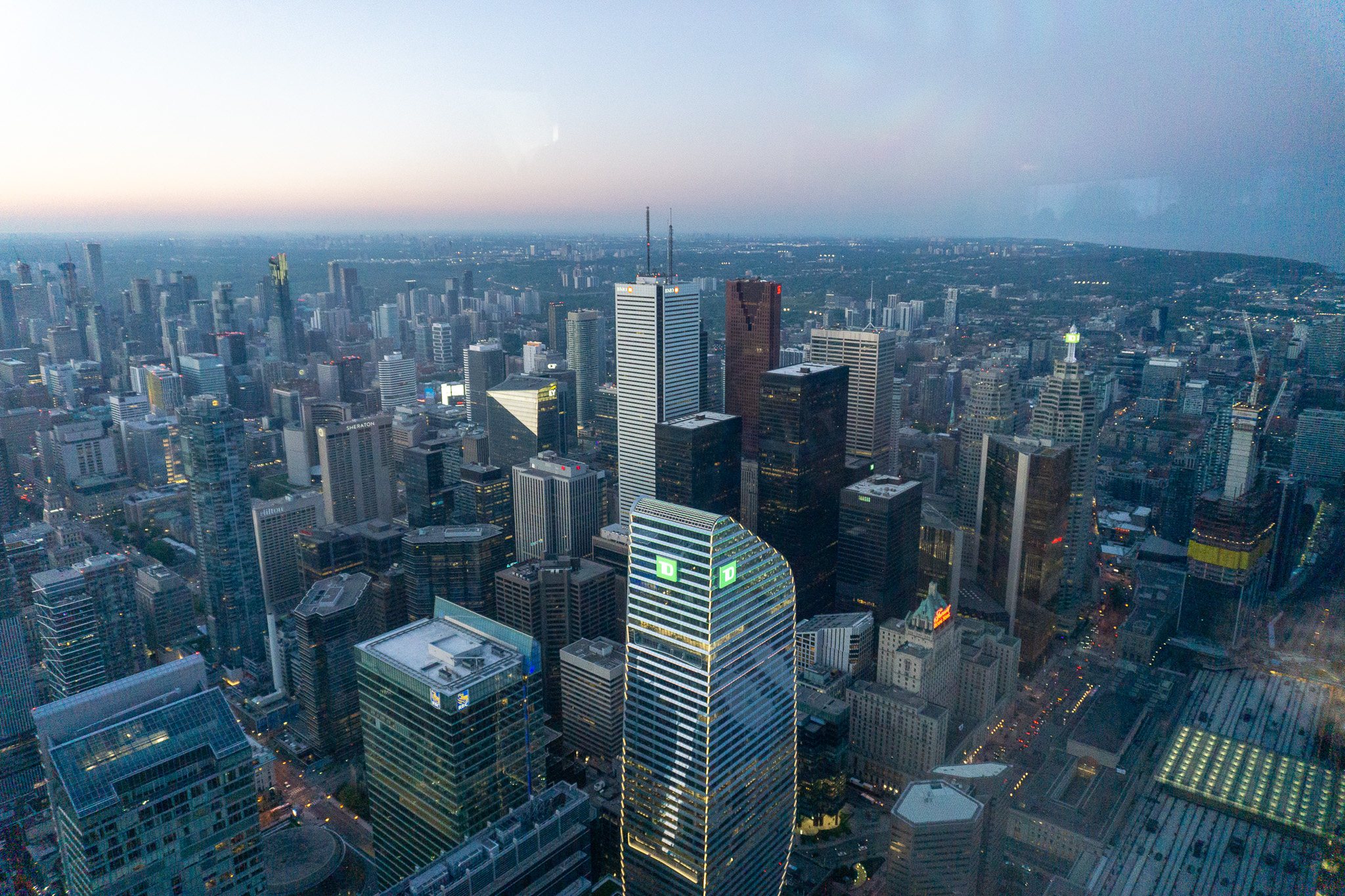
As North America’s fourth largest city, Toronto offers tourists an incredibly diverse cultural experience and a level of comfort and safety that’s hard to top. With easy access to world-class museums, a waterfront trail, and some of the best ethnic food in North America, seeing the city on a budget is not as difficult as it might seem.
In spite of its size, Toronto has remained remarkably walkable, making it an excellent city to explore on foot or by bike during the warmer seasons. The city itself is easy to navigate using public transit or walking, and the nearby natural wonders like Niagara falls make for a well-rounded experience.
The city itself has tons to offer, and the favorable exchange rate for American or European travelers makes planning a trip here even more enticing.
Quick Facts
Daily Budget: CAD $100-160 (~USD $75-115)
Best Time to Visit: Late spring, early autumn
Recommended Stay: 4-5 days
Language: English (French officially bilingual)
Currency: Canadian Dollar (CAD)
Tipping: 18-20% expected at sit-down restaurants
In this post I cover the free and budget-friendly activities worth doing in Toronto, the best times of year to visit, some practical travel advice, plus details on a day trip out to Niagara Falls.
When to Visit
The best times to visit Toronto on a budget are typically late spring and early autumn, when the weather is pleasant but tourism is slower than in the middle of summer.
May through early June offers warm temperatures and lower than peak prices without the summer crowds. The city starts to come alive after a long winter and most outdoor attractions are fully operational without the humidity that arrives later in the summer. As an added bonus, baseball season is just kicking off in spring and tickets to Toronto Blue Jays games are very reasonably priced.
September through October is my personal favorite time to visit cities in this region. Humidity drops significantly, temperatures hover between 15-22°C (59-72°F), and the city hosts some of its best annual events. The Toronto International Film Festival (TIFF) runs in early September and brings a cultured energy to the city, with some affordable and even free public screenings available if you plan ahead.
Summer (July-August) offers the warmest weather but also the highest accommodation prices and oppressive humidity that can make long days of walking around the city sticky and uncomfortable. If summer is your only option, budget a little more and plan some indoor activities for the hottest part of the afternoon.
Winter is the cheapest time for flights and accommodations, but Toronto winters are no joke. Temperatures regularly drop to -10 to -20°C (14 to -4°F) with wind chill that makes it feel significantly worse. Nathan Phillips Square operates as a free public ice skating rink from roughly December through February, and the holiday markets are charming, but unless you find a spectacular flight deal, winter is not recommended for a first visit.
Getting to Toronto
By Plane
Pearson International Airport (YYZ)
Pearson is the largest airport in Canada and a major hub for both international and domestic routes. Like most major airports there are occasionally some excellent international flight deals, particularly from Europe, the US, and the Caribbean. If your travel dates are flexible and you can travel with a single carry-on, flying into Pearson is almost always your best bet for getting to Toronto affordably.
Once you land, the fastest way into the city is the UP Express train, which runs every 15 minutes and gets you to Union Station in 25 minutes for CAD $12.35. It’s not the cheapest option but it is by far the most reliable, particularly if you have a flight to catch on the way out.
If you want to save a few dollars, the TTC Bus 900 connects the airport to the Kipling subway station, from which you can ride into the city center for CAD $3.30 total. Budget an extra 30-45 minutes for this option.
Taxis charge a flat rate of approximately CAD $50-$60 to downtown, which makes sense if you’re splitting the cost between three or four people. Uber and Lyft hover around CAD $40-60 depending on surge pricing and traffic.
Billy Bishop Toronto City Airport (YTZ)
Bishop is a smaller airport located on a small island a few hundred meters from downtown, served almost exclusively by Porter Airlines. While flights here tend to be slightly more expensive, occasionally the fares are competitive and the location is unbeatable.
A free pedestrian ferry runs every 15 minutes and takes two minutes to cross, after which you can walk downtown or take a short ride to your final destination.
By Train


VIA Rail is Canada’s national passenger rail service, linking Toronto to cities as far as Halifax and Vancouver. It’s neither the cheapest nor the quickest way to travel, but it offers a comfortable and relatively stress-free option. I took the train from Windsor to Toronto and had no complaints aside from a few delays.
From the US side, connections through Buffalo or Detroit are possible, though routing can be indirect. If you plan to take the train from Windsor there is a small parking lot where you can leave your car. By crossing the border on your own you can save a significant chunk of time and still avoid driving and parking in Toronto.
Book your tickets well in advance at viarail.ca for the best fares, as prices rise significantly closer to departure.
By Bus
Taking a bus from US cities like Buffalo, Detroit, or New York is straightforward and often very affordable. Flixbus and Megabus both operate routes into Toronto from the US, with fares that can be as low as CAD $20-40 one way if booked in advance.
The journey from Buffalo takes roughly three to four hours including the border crossing, and from Detroit around six to eight hours. It’s the least comfortable and slowest option, but if you’re trying to keep costs as low as possible, the bus is hard to beat on price.
By Car
Traveling to Toronto by car is one of the most time-efficient ways to get there, particularly if you’re coming from the US. The Peace Bridge at Buffalo and the Ambassador or Gordie Howe bridges at Detroit are the two most common border crossings, and a valid passport is required regardless of nationality. That said, once you’re in the city I’d actually advise against driving if you can help it. Toronto is easy to navigate on foot and by public transit, parking is expensive, and most attractions are accessible via the subway without any hassle.
Unless you already own a car and plan to drive out of the city for the Niagara day trip, I recommend leaving it at the border. There is ample parking at most train stations if you plan on leaving your car outside of the city for a few days. This alone could save you $100+ in parking fees.
Where to Stay
Staying in Toronto is expensive by Canadian standards but significantly more affordable than other tier one major cities like New York or San Francisco. If you’re traveling with a friend or two on a budget, hostels are widely available and reasonably priced for prime locations. Splitting a hotel bed with a partner increases overall cost slightly but significantly improves the experience when it comes to privacy.
Hostel dorm beds run about CAD $40-70 per night depending on the season and neighborhood, while budget hotels start around CAD $100-150. For groups of three or four people, short-term apartment rentals via Airbnb or Vrbo can actually work out cheaper per person than hostel beds, particularly for stays of more than a few days.
Hostel recommendation
Whether you’re traveling on your own or with a small group of friends, staying in a hostel is likely the cheapest way to sleep in the center of town.
As far as centrally located hostels go, The Clarence Park is probably your best bet. With bunk-style beds and shared bathrooms and common areas, stays here typically range between CAD $40 and $65 depending on dates and number of beds per room.
For such a prime location this price is hard to beat, and coupled with the fact that you will most likely be out all day this is one of the best deals you’ll find. Save your money for other city experiences and don’t forget a solid pair of ear plugs.
Hotel Recommendations
If you’re traveling on a budget but can’t imagine sleeping at a hostel, a hotel like the Nester Finn in the entertainment district offers much more privacy.
This boutique hotel still offers an incredible value based on how centrally located it is, plus private space. Stays here run closer to CAD $200 a night, but if you’re traveling with a partner CAD $100 per person is reasonable based on the location.
Best Neighborhoods
When it comes to neighborhood choice, location matters more in Toronto than in a compact European city. The downtown core is walkable but the distances between neighborhoods can be significant, so staying close to the attractions you care most about is worth factoring into your decision.
Kensington Market and Chinatown are my top recommendation for budget travelers. This area puts you within walking distance of most downtown attractions, surrounded by some of the cheapest and most interesting food options in the city. It’s also one of the more characterful neighborhoods to base yourself in, with a mix of vintage shops, street art, and independent cafes that gives it a genuinely local feel.
Downtown and the Entertainment District maximizes convenience at the cost of higher prices and a more generic tourist atmosphere. It makes sense for a short two or three night stay where you want to walk to everything, but the savings you’d make staying slightly further out usually outweigh the convenience.
Queen West strikes a good balance between affordability and character, with a lively bar scene, good transit connections, and slightly lower accommodation prices than the immediate downtown core.
The Distillery District is worth visiting for a meal or an afternoon, but accommodation here tends toward the boutique end of the market and is priced accordingly. Better as a destination than a base.
For groups or longer stays, renting an apartment in any of these neighborhoods via Airbnb or Vrbo is worth pricing out, particularly in the shoulder seasons when rates are more reasonable.
Getting Around


Toronto is a sprawling city and while the downtown core is walkable, getting between neighborhoods efficiently requires a bit of planning. The good news is that the transit system is comprehensive and easy to navigate.
TTC (Toronto Transit Commission)
The TTC runs Toronto’s subway, streetcar, and bus network and covers the entire city. For most tourists, the two most useful subway lines are Line 1 (Yonge-University), which forms a U-shape connecting Union Station, the downtown core, and Bloor Street, and Line 2 (Bloor-Danforth), which runs east-west and connects neighborhoods like Kensington Market and the eastern waterfront.
The streetcars that run along King and Queen Streets are slower but useful for east-west movement across the downtown core. One important warning if you plan to rent a bike: the streetcar tracks are embedded in the road and are genuinely dangerous for cyclists. Avoid King and Queen Streets on a bike.
A single fare costs CAD $3.30 with a Presto card or CAD $3.65 paying cash. A day pass runs CAD $13.50. The Presto card is a reloadable tap card available at any subway station for CAD $6 and is worth picking up for any stay of three or more days. It works across the TTC and also on GO Transit, which is the regional rail system you’ll likely use for the Niagara Falls day trip.
Bike Share Toronto
Toronto has a solid bike share network that is particularly useful for waterfront rides and downtown exploration. A 24-hour pass costs CAD $7 and a 72-hour pass runs CAD $15, both available through the Bike Share Toronto app. The network is concentrated in the downtown core and works well for flat rides along the waterfront, though some of the hillier residential streets are less bike-friendly than what you’d find in Copenhagen.
The PATH
Toronto’s underground pedestrian network connects over 30 kilometers of shops, food courts, and walkways through the downtown financial district. It sounds more impressive than it is to navigate-the signage is genuinely confusing-but it’s extremely useful in winter for moving between Union Station and downtown hotels or attractions without going outside.
Uber and Lyft
Both operate widely in Toronto. Most downtown trips run CAD $10-20 and the apps work exactly as you’d expect. Useful late at night or in bad weather but adds up quickly if used as a primary way of getting around.
Free Things to Do in Toronto
Many of Toronto’s headline attractions cost at least a little money, but there’s plenty worth doing that won’t cost you anything at all.
Nathan Phillips Square

No visit to Toronto is complete without stopping at Nathan Phillips Square. This urban plaza in front of City Hall features the iconic Toronto sign- large three-dimensional letters that spell out the city’s name in front of a reflecting pool-with the distinctive curved towers of City Hall as the backdrop. In summer the square hosts free outdoor concerts and events, and in winter the reflecting pool becomes a public skating rink.
It’s one of those places that photographs better than almost anywhere else in the city, and it costs nothing to visit. For the best photo-op, there is a narrow elevated platform on one side of the square that offers excellent views of the square and the large block letters.
Toronto Waterfront Trail
Walking or biking the Toronto Waterfront trail along Lake Ontario is one of the best free activities in the city. The trail stretches for kilometers along the lakefront and offers an unusual perspective on the skyline from the water’s edge. On a clear day the views are excellent, and the trail connects several parks and public spaces that make for natural stopping points. If you rent a Bike Share bike this is the most natural route to take.
Explore St. Lawrence Market

Established in 1803, the St. Lawrence Market is one of the oldest and most beloved public markets in North America, housed in a beautiful 19th century building in the old town area of Toronto.
Walking around the market is free, and even if you don’t buy anything the atmosphere alone is worth the visit. That said, it’s nearly impossible to walk through without buying something-the peameal bacon sandwich, a Toronto classic, runs around CAD $8 and is one of the best budget food experiences in the city.


Kensington Market
Kensington Market feels less like a market and more like a neighborhood. It’s a dense cluster of vintage shops, international grocery stores, street food vendors, and independent cafes packed into a few blocks west of Chinatown.
It’s one of the most distinctly local parts of Toronto and completely free to wander through. Budget a few dollars of course for snacks or a cup of coffee and you have yourself a solid half-morning of entertainment.
Graffiti Alley
Running parallel to Queen Street West, Graffiti Alley (officially Rush Lane) stretches for nearly a kilometer and is covered floor to ceiling in murals, tags, and large-scale street art installations. It’s one of the longest mural corridors in North America and makes for excellent photos. Combine it with a walk along Queen West and you have a solid free afternoon.
Toronto Islands
Accessible by ferry from the Jack Layton Ferry Terminal near Union Station, the Toronto Islands offer beaches, parkland, and some of the best skyline views in the city. The ferry costs approximately CAD $9 round trip for adults, which is a small price for what amounts to a half-day escape from the city. In summer the beaches get crowded, but the views of downtown from the island are well worth the trip at any time of year.
Budget-Friendly Activities


CN Tower
At CAD $43 for the standard observation deck, the CN Tower isn’t cheap-but it’s hard to argue with the views on a clear day. Standing 553 meters tall, the tower was the world’s tallest freestanding structure for over three decades and remains one of the most iconic landmarks in North America. The standard observation deck gives you unobstructed 360-degree views of the city, Lake Ontario, and on exceptionally clear days, the spray from Niagara Falls. Book tickets online in advance to avoid queuing, and skip the glass floor and EdgeWalk add-ons unless you have a specific desire to test your fear of heights.
Blue Jays Game at Rogers Centre


Catching a Toronto Blue Jays game is one of the best budget activities in the city and a genuinely fun way to spend an afternoon or evening. Upper deck tickets can be found for as little as CAD $15-25 and include access to a covered stadium with a retractable roof, meaning the game goes ahead regardless of weather. The atmosphere is excellent and the stadium is easy to reach by TTC. Note that outside food and drink isn’t permitted inside, so factor in the cost of stadium concessions if that’s your plan.
Royal Ontario Museum

The Royal Ontario Museum (ROM) is Canada’s largest museum and houses an impressive collection spanning natural history, world cultures, and art across six floors. General admission runs approximately CAD $23 for adults, and the museum is easily worth three to four hours of exploration. The dinosaur galleries alone make it worth visiting. Check the museum’s website for free admission days before you go.
Casa Loma


Casa Loma is a genuine Gothic Revival castle sitting on a hill in the middle of a major North American city, which sounds improbable until you’re standing in front of it. Built in the early 20th century by a Canadian financier, the castle is now a museum and event venue that offers self-guided audio tours of the interior for approximately CAD $40. Even if you decide the admission price is too steep, the exterior and surrounding grounds are worth seeing. Combine it with lunch in the nearby Annex neighborhood to round out the visit.
Steam Whistle Brewery Tour
Located in a beautifully restored 1929 roundhouse directly beside the CN Tower and Rogers Centre, Steam Whistle is one of Toronto’s most beloved craft breweries. Tours of the facility are available starting around CAD $23 and include samples of their flagship Pilsner. Check their website for precise pricing and book your tour ahead of time.
The brewery tour is an affordable and distinctly Toronto way to spend an hour or two, and the building itself is worth seeing regardless of whether you drink beer. If you’re into craft beer, make sure to also stop by the Amsterdam Brewhouse which offers excellent views of the waterfront along with fine artisanal beer.
Eating on a Budget in Toronto
Daily food budget: CAD $40-70 (~USD $30-52) per person
Toronto’s food scene is one of its greatest strengths and one of its most accessible budget hacks. The city’s extraordinary cultural diversity means that genuinely excellent food from dozens of cuisines is available at prices that would be unthinkable in most North American cities of comparable size. The key is knowing which neighborhoods to eat in.
Chinatown along Spadina Avenue is the most obvious starting point. Dim sum lunch for two runs CAD $25-35, a bowl of pho costs around CAD $12-16, and the grocery stores along Spadina offer some of the cheapest fresh produce in the city. If you’re self-catering for any part of your trip, shopping in Chinatown instead of a downtown supermarket will save you meaningful money.
Kensington Market is the other essential eating neighborhood, offering a more eclectic mix of cuisines in a compact area. Roti, tacos, falafel, and empanadas are all available for CAD $10-14, and the quality is consistently high. This is where I’d point anyone who asked me for the single best budget eating area in the city.
Little India along Gerrard Street East offers some of the best value Indian food in North America. A full meal here runs around CAD $12-18 and the quality is exceptional.
The St. Lawrence Market deserves a separate mention. Beyond the peameal bacon sandwich, the market offers a range of affordable prepared foods and local products that make for an excellent and inexpensive lunch. Come on a Saturday when the farmers’ market runs alongside the main building for the full experience.
The Distillery District is worth visiting for a meal at least once, but go in with adjusted expectations for the higher prices. The atmosphere is excellent; Victorian industrial architecture repurposed into a pedestrian-only district of restaurants and galleries-but it caters to a more upscale crowd and the bills reflect that.

Tipping in Toronto
One thing that catches many European visitors off guard is the tipping culture. Unlike Western Europe, tipping 18-20% at sit-down restaurants is expected and not optional. Most point-of-sale terminals will prompt you with suggested percentages that have crept up to 20-25% in recent years-you can always tap “custom amount” and enter whatever you think is appropriate, but factor the tip into your food budget from the start. That CAD $15 meal becomes CAD $18-19 after tip, which compounds quickly over a few days of eating out.
Entertainment and Nightlife
Toronto’s nightlife is concentrated along King West and Queen West, with the Entertainment District filling in the gaps for larger clubs and venues. Drinks are expensive by most standards-expect to pay CAD $8-12 for a beer and CAD $14-18 for a cocktail at most bars. If you are worried about overspending, most hostels will feature bars with reasonably priced drinks or a commons area where you can pre-game with drinks from the supermarket.
The Steam Whistle Brewery and the various craft beer spots in Kensington offer a more affordable alternative for those who’d rather spend the evening drinking well without spending a fortune. Regardless where you stay there are several local brew pubs that offer craft beer and a mellow atmosphere like Left Field Brewery, Black Lab Brewing or Old Flame Brewing Company.
Bars in the city generally stay open until 2 AM, but check their websites for each specific bar. The nightlife runs later than a European city like Copenhagen, but ends earlier than somewhere like San Sebastián, where eleven is considered a reasonable dinner time.
Day Trips from Toronto
Niagara Falls and Niagara-on-the-Lake


The Niagara region makes for an easy and genuinely impressive day trip from Toronto, and combining the falls with a visit to Niagara-on-the-Lake gives you a more complete picture of the area than the falls alone.
The most affordable way to get there is the GO Train from Union Station, which runs to Niagara Falls station in approximately two hours for CAD $20-25 each way. Flixbus and Megabus also cover the route for similar or lower prices if you book in advance. Having a rental car gives you significantly more flexibility, particularly for getting between the falls and Niagara-on-the-Lake, which has limited public transit connections.
One thing worth knowing before you go: the Canadian side of the falls has dramatically better views than the American side. The Horseshoe Falls, which is the largest and most photographed section, faces toward the Canadian bank, meaning you’re looking directly at the cascade rather than at the back of it. Walking along the Niagara Parkway on the Canadian side is free and offers excellent vantage points without paying for any of the attractions.


The Maid of the Mist boat tour gets you close enough to the base of the falls to understand their scale in a way that the viewing platforms don’t quite achieve. Tickets run approximately CAD $32 for adults and in my opinion it’s worth the money if your budget allows. The Journey Behind the Falls attraction (approximately CAD $26) takes you through tunnels to observation decks positioned directly behind the curtain of water, which is a genuinely unusual perspective.
One thing I’d recommend avoiding is Clifton Hill, the tourist strip immediately adjacent to the falls. It’s a wall-to-wall collection of overpriced restaurants, haunted houses, and carnival attractions that has almost nothing to do with the natural wonder you came to see. It’s worth getting a coffee to-go and wandering through, but I would not recommend stopping here for a meal.
Niagara-on-the-Lake sits about 20 minutes north of the falls and is worth a visit if you have a car. It’s a beautifully preserved 19th century town surrounded by vineyards, with a main street lined with independent shops and restaurants. Wine tasting at one of the nearby estates runs CAD $15-25 per person for a flight of several wines, and the drive through the wine country between the falls and the town is pleasant on its own. If you’re short on time or relying on public transit, Niagara-on-the-Lake can be skipped without major regret-but if you have the wheels and the afternoon, it’s a worthwhile addition.
Hamilton Waterfalls

Located about an hour west of Toronto by car or GO bus, Hamilton sits at the edge of the Niagara Escarpment and has more waterfalls within its city limits than anywhere else in North America.
Webster’s Falls, Tew’s falls, and Albion Falls are all just a short drive from Hamilton, and easy enough to access that most families will have no trouble getting to them. Most of the waterfalls are free to visit and accessible via short hikes from parking areas. Albion Falls and Webster’s Falls are the two most visited and both are straightforward to reach. It’s a good option if you’ve already done Niagara and want a different kind of day trip, or if hiking and natural landscapes appeal more than the average tourist attractions.
I also stopped at Tiffany falls in Milton, Ontario in 2019 on a rock climbing trip to Rattlesnake Point, and it was well worth the stop. If you decide to rent a car for this excursion I highly recommend scheduling a stop for this attraction on the way to Niagara Falls.
Money-Saving Tips
Getting a Presto card on arrival is one of the simplest ways to immediately reduce your transit costs, saving you CAD $0.35 per ride versus paying cash-which adds up over several days of getting around the city.
Eating in Chinatown and Kensington Market instead of the tourist-facing restaurants near the CN Tower or in the Entertainment District can cut your daily food costs by a third without any sacrifice in quality. In many cases, the food is significantly better outside of the tourist traps.
Checking museum websites before you visit is worth the five minutes it takes. Several major museums offer free admission on specific days or evenings, and planning around those days can save CAD $20-40 per person per day.
Buying alcohol at a government-run LCBO store rather than at a bar or restaurant costs a fraction of the price. Ontario has strict liquor licensing rules, meaning the LCBO is your primary option outside of bars-but the selection is good and the prices are reasonable.
For the Niagara Falls day trip, resisting the temptation of Clifton Hill’s restaurants and eating beforehand or packing a lunch saves a meaningful amount of money. The tourist markup in that strip is real, and your money will go further in Toronto.
If visiting in September, checking the TIFF schedule for free or affordable public screenings is absolutely worth doing. The festival brings significant energy to the city and some of its programming is accessible without expensive passes.
Cultural Events and Festivals in Toronto


There are of course cultural celebrations all year long, but when the weather is warm the streets of Toronto truly come alive. Below is a list of a few cultural events that you might want to plan your trip around or include in your itinerary.
High Park Cherry Blossoms (late April – early May): Thousands of people come to High Park each spring to watch the famous Somei Yoshino cherry trees bloom, making it one of the most photographed events on the Toronto calendar.
Hot Docs (late April – early May): North America’s largest documentary festival showcases over 200 Canadian and international documentaries across roughly ten days at the Hot Docs Ted Rogers Cinema in the Annex neighborhood.
Doors Open Toronto (late May): Over 150 historically and architecturally significant buildings across the city open to the public for free for one weekend, including spaces that are otherwise inaccessible to visitors.
Pride Toronto (late June): The legendary Pride Parade transforms Yonge Street into a river of color, music, and joy as one of the largest Pride celebrations in North America.
Toronto Jazz Festival (late June): The festival hosts around 500,000 guests and features some of the biggest names in jazz across multiple outdoor and indoor venues, with a mix of free and ticketed shows.
Toronto Caribbean Carnival / Caribana (late July – early August): North America’s largest celebration of Caribbean culture features dazzling costumes, reggae and calypso music, a colorful street parade, and culinary offerings from local restaurants.
Canadian National Exhibition / The Ex (mid August – early September): One of North America’s largest annual fairs, running for roughly three weeks at Exhibition Place with rides, concerts, food competitions, and an annual air show.
Toronto International Film Festival / TIFF (early-mid September): One of the world’s largest and most prestigious film festivals, TIFF brings world-premiere screenings, celebrity appearances, and industry luminaries to Toronto and draws over 400,000 attendees annually, with some affordable public screenings available.
Nuit Blanche (one night in October): Nuit Blanche transforms Toronto into an all-night contemporary art festival, with free outdoor installations and performances spread across the city from dusk until dawn.
Toronto FAQs


How much does a trip to Toronto cost per day?
Budget travelers should expect to spend around CAD $100-160 (~USD $75-120) per day covering a hostel bed, supermarket and cheap restaurant meals, transit, and one paid attraction.
Where should I stay in Toronto on a budget?
Kensington Market or Chinatown give you the best combination of affordable accommodation, cheap food options, and walking distance to downtown attractions. If traveling on your own, hostels are the way to go. If you’re visiting with a group of friends, consider checking prices on sites like Airbnb or contact hostels about booking a full 4 or 6 bed dorm for just your group.
Is Toronto a safe city?
Yes, Toronto consistently ranks among the safest major cities in North America. Normal urban precautions apply downtown, particularly late at night around Dundas Square. That said, I felt relatively safe walking back late at night and had zero issues.
Is Toronto expensive compared to other North American cities?
Mid-range by North American standards-more expensive than most US mid-sized cities but noticeably cheaper than New York, San Francisco, or Vancouver. The strength of the American dollar is notable here, and when you see the bills converted to USD you’ll be pleasantly surprised.
How many days do you need to see Toronto?
Three days covers the major attractions at a reasonable pace; four to five days allows for a Niagara Falls day trip and more relaxed neighborhood exploration.
Do US citizens need a visa to visit Canada?
No, US citizens only need a valid passport for stays under 180 days. Most other nationalities need either a visa or an eTA (Electronic Travel Authorization), which costs CAD $7 and is usually approved in minutes at canada.ca. As always, confirm your specific country’s visa requirements before booking any trip.
Is the CN Tower worth it?
At CAD $43 for the standard observation deck it’s expensive, but the views are genuinely impressive on a clear day. Skip the glass floor and EdgeWalk add-ons to keep costs down, and try to time your visit to watch the sunset over the city.
Can I do Niagara Falls as a day trip from Toronto?
Yes, easily. The GO Train from Union Station reaches Niagara Falls in about two hours for CAD $20-25 each way. A full day covers both the falls and a quick visit to Niagara-on-the-Lake if you have a car or bike. There are also several companies that plan single day excursions that combine the falls, Niagara-on-the-Lake, and time to visit Niagara.
Do I need a car to visit Toronto?
No. The TTC covers all major tourist areas and the city is reasonably walkable downtown. A car is only useful for the Niagara day trip or visiting neighborhoods well outside the core.
Is tipping expected in Toronto?
Yes-18-20% is standard at sit-down restaurants. This is a significant difference from Western Europe. Most payment terminals prompt for 18%, 20%, or 25% but you can always enter a custom amount.
What’s the best neighborhood to stay in?
Kensington Market for budget travelers who want local character; downtown and the Entertainment District for convenience and nightlife; the Distillery District for a more boutique experience at higher prices.
When is the best time to visit Toronto?
May-June or September-October for the best balance of good weather, manageable crowds, and lower accommodation prices. I last visited in May and got lucky with some incredible weather; just know that Toronto can still be quite cold and rainy in early May.
Final Thoughts
Toronto is a world-class city that manages to feel accessible and safe despite being one of the largest metropolitan areas in North America. On my most recent trip there, my friend and I were both surprised by the feeling of safety, even walking home late at night through downtown. Though parts of the city center feel somewhat like a ghost town late at night, the ease I felt exploring Toronto is unlike anything I’ve experienced in cities around the US.
With affordable flights from most major cities around the globe and a safe, walkable downtown, Toronto is an attractive, easy to get to destination. Though the exchange rate constantly changes, a relatively strong American dollar means that your money will go further here than in most American cities. The food scene alone could justify a visit, and the combination of strong museums, a beautiful waterfront, and easy access to Niagara Falls gives you enough to fill a week without running out of things to do.
If I’m being honest, it’s not a cheap city in absolute terms-but it’s significantly more affordable than the reputation of major North American cities might suggest, particularly if you eat where the locals eat and use the transit system rather than cabs or Ubers.
Come with a plan, get a Presto card, and spend at least one afternoon wandering through Kensington Market and Chinatown before committing to any restaurant that has a menu posted in the window in four languages.
Did I miss anything? Drop your questions or tips in the comments below!
Leave a Reply