
When most people first arrive in Spain, they want to race out the door to start their Camino journeys. If you have travelled from far away, though, you probably have some things to get in order before you hit the road.
Your first days in Spain offer a time for preparation and adjusting, both to the new time zone and to the local daily rhythms. Most pilgrims will be eager to start their hikes, but often have to spend a day or two to get things in order.
Most likely you have been preparing for this trip for a while, training, reading about other people’s journeys, and counting down the days until you arrive. Though the downtime at the start of your trip may provoke some anxiety to just hurry up and get started already, try to spend a day or two relaxing before hitting the road, and collecting any necessary supplies you don’t yet have.
If you’re curious about some basics of The Camino de Santiago, check out my post on hiking the Camino solo, or brush up on some useful Spanish to use while walking this pilgrimage.
In this article, I’ll cover some of the things I did during my first few days in Spain for the Camino, along with some tips on setting yourself up for a successful pilgrimage.
First arriving in Spain for the Camino
It’s natural to feel excited to get started, but you want to be sure that you leave enough time at the beginning of your trip to take care of all the necessaries. You don’t want to be stranded between small villages, lost with no cell reception, when you first think about getting an international cellular plan.
If you have flown into a major city to save on airfare, this may be your only opportunity to get to know that particular city and visit a few tourist attractions.
Take your new surroundings in as you adjust. If you’ve flown in from far abroad, this will also give you time to adjust your internal clock to the local time. If you have flown in from the US, Canada or Australia, you will almost certainly have to run a few errands before taking off for this adventure.

Remembering to pace yourself is important, especially at the start, so that you don’t get burnt out after a few days or a week. This hike, after all, is more of a marathon than a sprint. By scheduling in a few days for flexibility, you don’t have to stress about making a tight deadline. If a town or attraction catches your fancy, you can spend time exploring it without ruining your whole trip.
The one thing that I heard time and time again from other pilgrims was, “I wish I had planned a few extra days!”
Landing at main entry points like Madrid or Barcelona for the Camino
If you arrive through a major city, as I recommend in my article about which airports to fly into for each of the major Camino routes, take some time to explore it. Especially if you are not intending to fly out of that same airport, this may be your only chance.

The Camino can be a bit grueling as you make your way across Spain, so take time to enjoy all that city life has to offer before heading into the countryside. I met a number of pilgrims who were very tired of Spanish food after a few weeks on the trail, so enjoy the city restaurants while you can!
If you intend to do some sightseeing, this could be a great time to check a few things off of your list as your body gets used to the new time zone and the different cultural rhythm.
Spain definitely runs on its own time schedule, and it may take a day or two for you to get adjusted. The restaurant kitchens there are not open all day or all night long, and there is a learning curve to figuring that all out. If you show up to a small town restaurant at 6p.m. for dinner, they may well be closed, and their kitchen almost certainly will be.
You’ll eventually get onto the local time schedule, but ease into it as you enjoy your first few days in Spain. While a 9p.m. dinner may not be typical for you, in Spain this is completely normal.
Spain has a very well-connected network of trains and buses, which means that you can save money by flying close to your destination and taking public transit the rest of the way. Here you can find maps of trains in Spain, as well as a detailed map of high-speed train lines.
Gathering essential Camino gear
There are a number of things you can’t fly with if you plan to only bring a carry-on bag. This list includes, but is not limited to: a knife, trekking poles, large containers of sunscreen, shampoo, toothpaste, etc. Any large containers of liquid or potentially dangerous items to have in an airplane cabin will need to be purchased once you land, or checked into the luggage compartment.
All of those items can be purchased once you arrive if you’re not interested in checking luggage. The trouble with checked luggage is that if your bag gets lost, you could be waiting for a few days until it’s located and shipped to you.
If you have only budgeted the exact number of days you need to walk the Camino, this poses a big problem. This is why I highly recommend keeping things simple and only bringing a carry-on.
Purchasing items in Spain that you aren’t allowed to bring in a carry-on
As mentioned above, if you fly in with just a backpack, you will likely need to pick up some supplies upon arriving in Spain.
‘Decathlon’ is a huge sporting-goods chain in Europe, and all of these items can easily be found there. They generally have big warehouse stores outside of major cities, and have some small storefronts in towns.
Decathlon has locations in tons of Camino towns, including outside of San Sebastián, in Bilbao, in Santander, in Sevilla, in Malaga, in major entry points like Madrid and Barcelona, and in tons of other cities around Spain. A quick Google search should help you find one along whichever Camino route you plan to walk.
Picking up a local SIM card or phone plan for the Camino
There are a number of companies you can buy a SIM card from in Spain, such as Vodafone, Orange, or Movistar. Most cities will have storefronts you can stop by to pick up a local phone plan. You might need some Spanish language skills to do all of this, depending on where you are.
Getting a local SIM card was necessary for me, because of the outrageous fees that my data provider charges for international data plans. It will depend on who your carrier is, but by doing this, I saved myself hundreds of dollars in fees.
Call your cell provider ahead of time to confirm that your phone is unlocked before you try this. This is important to check because some phone companies will not allow you to swap out the SIM card.
Once you top off your prepaid SIM card, you should be able to activate your mobile phone plan and access Wi-Fi just about anywhere in Spain. I think I spent roughly 40 USD for two months of data on a pay-as-you-go plan, which was absolutely worth the money.
No matter which type of phone plan you end up going with, just make sure you have mobile data before tackling any remote stretches that may not have anywhere to top up your data.
If you are not planning on getting mobile data for your Camino, make sure to find and download the relevant GPS maps ahead of time.
Getting cash out of an ATM to pay for small transactions
The days of needing to pick up stacks of local currency at the airport are long gone. However, it is still a good idea to pick up one to two hundred euros once you are in town where you can find ATMs.
Many bars and restaurants in small towns still operate on a mostly cash basis, or do not want to pay the fees associated with card transactions for just a coffee or a piece of fruit. Likewise, many fruit or vegetable vendors will not want to break large 50 euro notes, so try to keep a good number of bills no larger than 20s on you if at all possible.

Avoid exchanging money at the airport if you can, since this is where you’ll find the worst exchange rates. Find out which bank network has the lowest fees for your bank provider and find an ATM once you arrive in town. Most banks in Spain have a small, enclosed space right outside where you can access a secluded ATM even if the bank is closed.
Calling your bank ahead of time to let them know you’re traveling can also save you some headaches once you’re in Spain. Telling them specific dates and where you’ll generally be is a great idea as well. This ensures that your card will not be deactivated without warning.
Especially if you have swapped out your SIM card for a Spanish one, this scenario could create a huge headache for you. So long as you take some basic precautions, you should have no problems.
Initial exploration during your first days in Spain
While adjusting to a new time zone, spending a few days exploring and adjusting to the local language and culture can keep you plenty busy. I know that when I flew to Spain from the US, I really needed a couple of days to get my sleep schedule back to normal.
Visiting local landmarks can be a fun way to spend your free time once you pick up whatever gear you might need. As I said before, running errands can become tricky when you don’t understand the seemingly mysterious hours that Spanish shops keep.
Indulge in the local cuisine without guilt, because you’ll almost certainly end up losing weight as you walk hundreds of kilometers over the coming weeks.
Relaxing and enjoying the downtime before the physically demanding journey may be tough, but I cannot recommend it enough. Whether you chose to fly into and out of the same city or not, enjoy the time there while you can, as you adjust to the local rhythm. Though hiking several hours a day in fresh air may help you sleep, it takes a few nights to become truly acclimated.
This shift in timezones and adjusting to the local timetable make the first few days an excellent opportunity to explore and pick up any last-minute supplies.
Pilgrim’s Office and getting an official credencial
Getting an official pilgrim stamp book (credencial) is easy, and can be done in any of several locations. If you arrive in Spain without one, you can stop by a tourist information center, an albergue, or even the local cathedral if it’s open.
Further information can be found at any tourist center if you have questions about the particular route you’re taking or other attractions to see in the area.

The credencial is a sort of pilgrim passport that allows you to stay in pilgrim-specific hostels, or albergues, along the Camino. Each time you stay at an albergue you’ll get a stamp in your book which acts as proof that you stayed there.
At the end of your Camino trip, you’ll take your official pilgrim passport to the Oficina del Peregrino in Santiago de Compostela. The dated stamps act as proof that you have completed the pilgrimage, earning you the right to get a special certificate authenticating your completion of the pilgrimage.
To receive an official certificate, you’ll need to hike at least 100km (about 62 miles) and get stamps along the way. If you’re walking the entire Camino, you’ll have no trouble filling your book, and it makes a cool souvenir as well.
Slowing down and embracing the spiritual aspects of the Camino de Santiago
For many pilgrims, the Camino is akin to a moving party, though for many others it has a deeper meaning. Whether you are hiking the Camino for spiritual reasons or social ones, bringing a journal can help you remember the experience for decades to come.
I brought a small notebook and wrote each day about the things I saw and the people I met. More than anything it can serve as an activity log, and in a year or two when you look back at it, you’ll be reminded of stories that you have long since forgotten.

For the more spiritual pilgrims, attending local church services, and exploring the numerous churches and religious buildings along the way has a special significance.
Staying in any of several albergues located in monasteries or nunneries, you will certainly have opportunities to attend local mass. Even if you can’t understand the message, it’s still an interesting experience to hear the music and singing. I don’t consider myself a spiritual person, and I thoroughly enjoyed sitting in the Cathedral of Santiago during a church service. You don’t have to be a Christian to enjoy the ornate building and the time-honored rituals.
Taking the time to explore and truly enjoy your hike is important. The people and the places you see are all part of the journey and keeping some notes will help you remember the small details that fade over time. What seems normal by the end of the trip may have at first been shocking to you, so taking notes to look back and see your trip through an earlier perspective can make a fun sort of souvenir.
Final thoughts
Overall your first days in Spain are best spent adjusting to the local time zone and culture, and picking up the last-minute things that you will need on this pilgrimage.
In a country that runs on a very different schedule than the US, this can sometimes take a bit longer than expected. I would set aside at least two days at the start of your Camino to be sure that you can gather all the necessary gear.
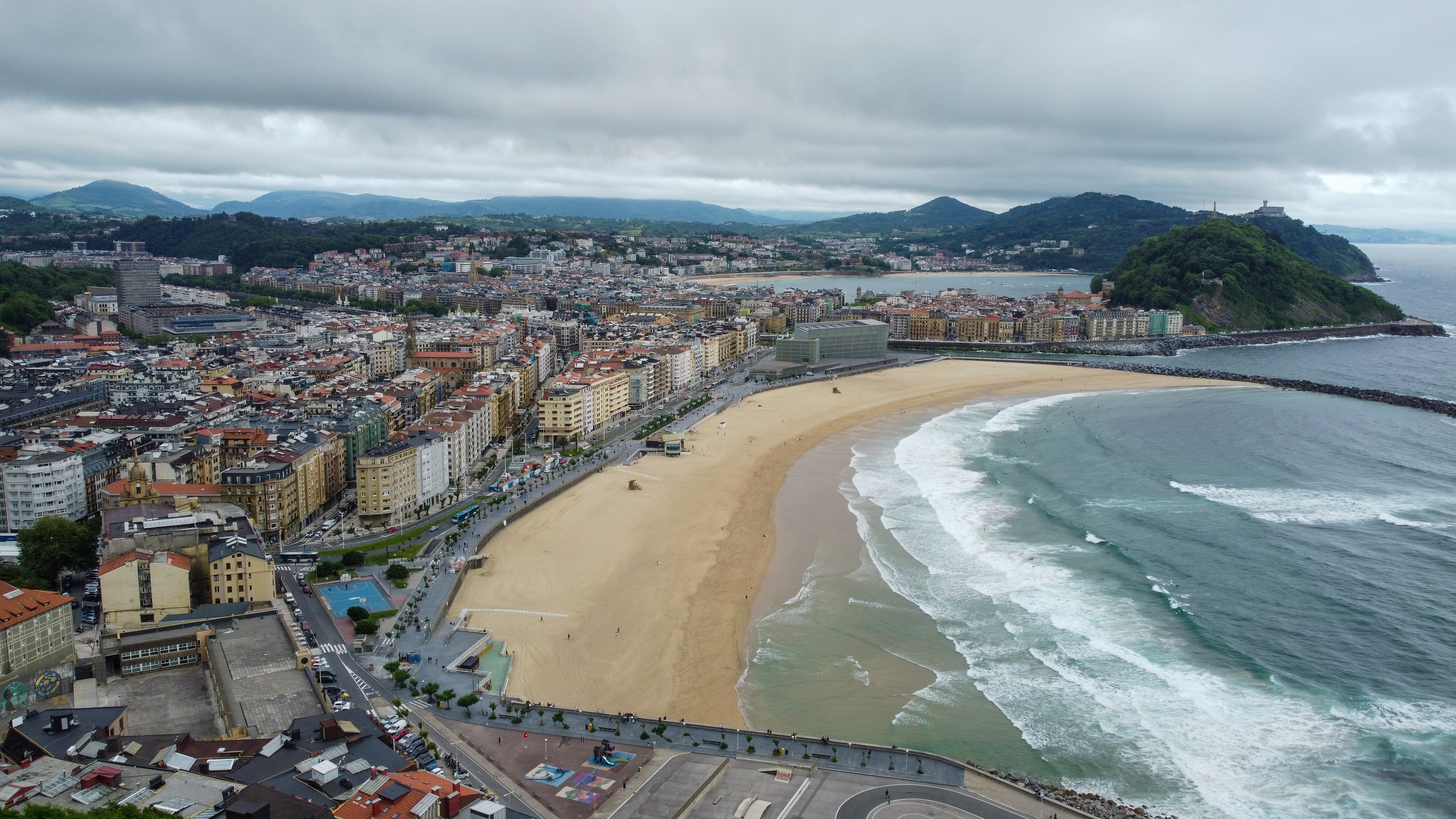
Especially if you are retired or have just finished a course of study (as the majority of pilgrims are), then you might as well factor in a few extra rest days for this trip. When you’re already paying for an intercontinental flight, a few extra days in hostels or albergues will not make much difference to your budget. I met countless pilgrims on the Camino del Norte that said they wished they had spent a few days in San Sebastián when they had the chance. Trust me, the extra day or two will not ruin a 30+ day trip.
For many, this may be the only opportunity to explore some of these smaller Spanish towns or cities. Take the time to truly enjoy your surroundings and spend that extra day in an interesting town if you want to.
You will undoubtedly meet pilgrims who are racing through this hike as fast as they physically can. That’s fine if you have a clear objective, but just make sure to factor in a few extra days in case of injury or unforeseen obstacles. Those people who ‘cannot’ slow down are often those who most need to.
My advice overall would be to savor your time in Spain and try to be as present as you can as you walk across this beautiful country. Let me know in the comments if you think I forgot to mention anything crucial. ¡Buen Camino!
Leave a Reply