
Last updated: November 2025
cheaptravels.blog is reader supported. When you buy something through the links on this site we may receive a small commission at no additional cost to you.
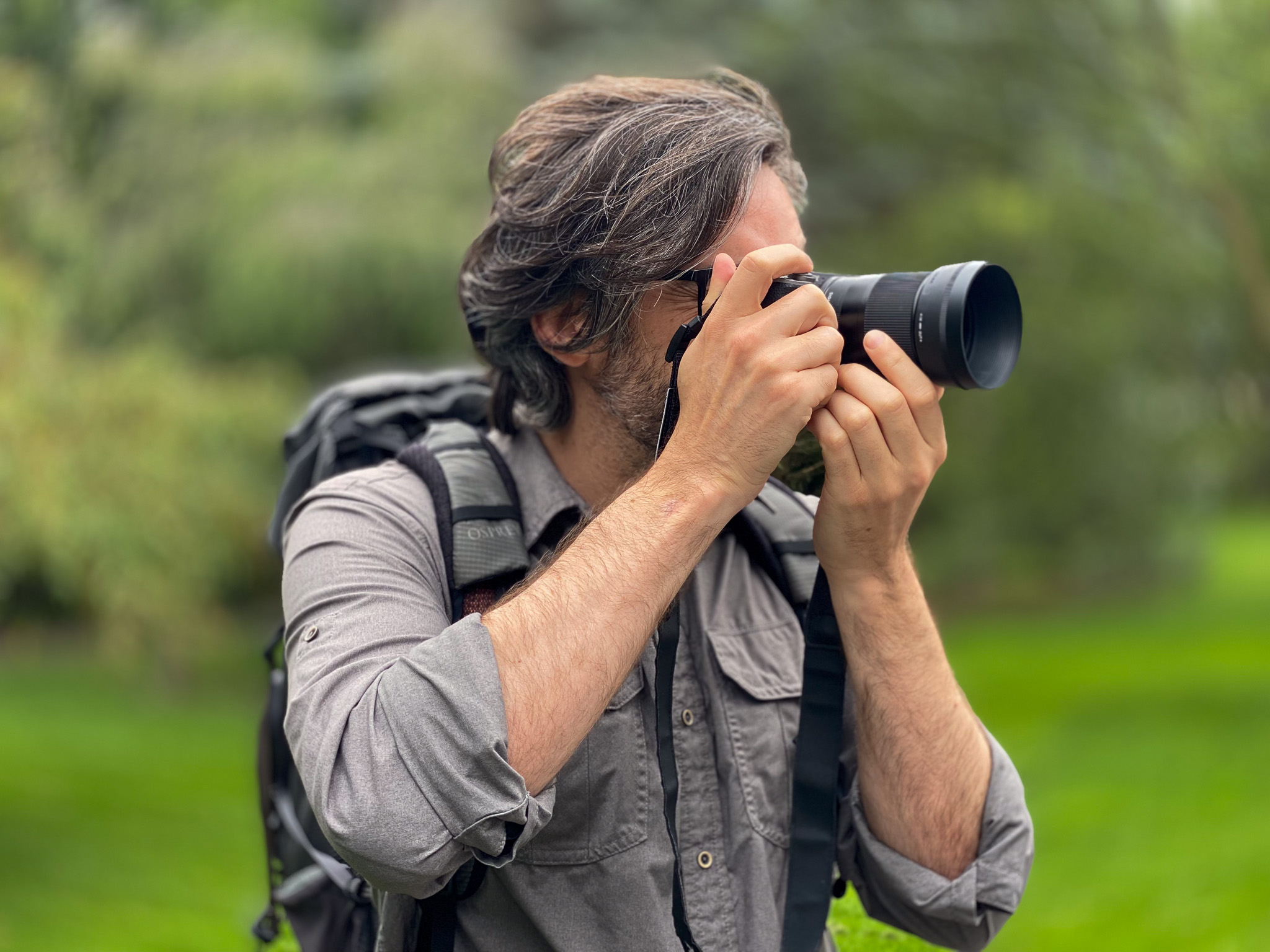
In this post I cover some of the best cameras to bring along on your Camino to help capture memories to last a lifetime.
The Camino de Santiago is an unforgettable experience, and most pilgrims will want photos to share their adventure with friends and family. Having the right camera makes it easy to capture the moment and give you high-quality images that you can cherish for years to come.
There are several possible Camino routes, all traversing the gorgeous rural landscapes and picturesque towns found throughout the Iberian peninsula. Whichever route you hike, having the right camera will help make sure you don’t miss the shot.
Choosing the Right Camera for your Camino
One of the most important things to remember about the Camino is that you will be carrying all of your things on your back. Both the weight as well as the waterproofing of gear will be important as it tends to rain quite a bit in northern Spain.
If you plan on taking a lot of pictures you’ll also need to consider the battery life of your camera along with storage capacity of the memory cards you bring along.
There are several types of cameras that would be ideal for this journey and they all have their pros and cons. Mirrorless cameras, point-and-shoot cameras, disposable film cameras and smartphones are all possible options with their own strengths and weaknesses.
In the next section I’ll dive into my top picks from each category as well as some of the accessories that will help you keep your gear safe.
Top Camera Picks for the Camino de Santiago
I’ll start with mirrorless cameras as I think they’re probably the best option for most hikers on the Camino. The light weight and high image quality from these cameras make them ideal for all types of travel photography.
Mirrorless Cameras
In contrast to the older DSLR cameras that used a mirror to reflect light up to their viewfinder, mirrorless cameras use a small screen to give a live view without the need for a mirror. This design ultimately translates into huge weight savings as the mirror itself was so heavy.
What’s more, you can get an impression through the viewfinder of how aperture and ISO changes will affect your photo before you actually take it. The days of taking pictures and then looking at the camera screen to see how it turned out will soon be forgotten.
When the first mirrorless camera was released in 2008 it cost thousands of dollars, but as more manufacturers threw their hats into the ring the prices have dropped significantly. These days there are many affordable options available even under a thousand dollars.
One of the early movers in this space was Sony, and today they are still one of the top brands when it comes to mirrorless cameras.
Sony Alpha 6100
This is my top budget-friendly pick for the Camino. It’s relatively inexpensive compared to other cameras and does everything you would need it to to capture beautiful pictures of your trip.
The Sony a6100 first came out as a replacement for the a6000 in August of 2019 and boasts a few upgrades like 4K video and 180 degree rotation of the screen.
I brought my Sony a6000, the predecessor to this camera, on my first Camino with just a kit lens and it worked out great. It was light enough to carry across Spain and inexpensive enough that I wasn’t constantly worried about it being damaged or stolen.

Stats:
- 24.2 Megapixels
- APS-C sensor
- BIONZ X image processor
- ISO range: 100-32000 (expandable to 51200)
- Real-time Eye AF for humans and animals
- 4k video at 30fps
This mirrorless camera is extremely lightweight, compact and a great camera for those looking to get an entry level camera with full controls.
It is, however, not waterproof so you’ll want to make sure that you have a watertight bag that will not let any rain or moisture in. If you’d prefer to spend a little bit more, the Sony a6400 offers similar stats but with full waterproofing.
For some shot types (double exposures, for example) there are extra apps you can buy and install on this camera. Overall the price can’t be beat for an entry-level mirrorless camera.
Canon EOS R50
Another great option for hikers is the Canon EOS R50. With comparable specs to the a6700, this camera is a great entry level camera for someone who wants to shoot with full controls but doesn’t want to break the bank.

Stats:
- 24.2 Megapixels
- Fully articulating touch screen
- APS-C sensor
- 4k video
Where it’s better than the Sony alpha 6100:
- Mic and headphone ports
- Fully articulating screen
- Better display quality on screen and viewfinder
- Better eye tracking
While the Canon features a few minor advantages over the Sony, it is significantly larger and heavier. Both of these are excellent cameras, and the biggest benefit overall is the incredibly high image quality without the weight of a DSLR.
These cameras are both similar in quality but your choice will likely depend on brand loyalty and the lenses you may already own. If I was just starting out I would probably go with the Sony but it really comes down to personal preference.
If you’re looking for a lightweight camera that can produce the highest quality images, these mirrorless cameras are the way to go.
Advanced Point-and-Shoot Cameras
Creating high-quality images these days doesn’t have to be hard. Many people find the simplified controls offered by point-and-shoot cameras to be exactly what they need.
I personally find it easiest to use the automatic metering functions if I’m snapping quick shots during a hike. Ever-changing light conditions and cloud cover make perfectly lighting a shot difficult on the go. After all, taking pictures shouldn’t be distracting you too much from your epic hike.
As you walk across Spain it’s nice to know that you can get high quality images close up, far away and in all different kinds of lighting conditions.
Canon G7X Mark II

Stats:
- 20.1 Megapixel 1.0” CMOS sensor and DIGIC 9 Image Processor
- 4.2x Optical Zoom (24-100mm f/1.8-2.8) with optical image stabilization
- 3.0” touch-screen
- 4K Video
- Live streaming capable, vertical video supported
Comparable in stats to the Sony a6100, this 4k capable camera comes with a permanently fixed Canon lens. One of my biggest complaints about traveling with multiple lenses is switching them out for different focal ranges. This Canon is an ideal travel camera, checking all of my boxes for focal lengths, image quality, size and weight.
If you’re looking for a Canon that can do everything you need with a huge focal range, this camera is for you.
Sony ZV-1
Advertised as a camera for ‘vlogging’, this lightweight mirrorless camera would make an excellent option for capturing your travel experience. Even if you don’t plan on becoming a YouTuber, this camera packs several features that you normally only see on more expensive options.

Stats:
- 20 Megapixel sensor
- 24-70mm fixed Zeiss lens
- 4k video capability
- Screen that flips so you can see what you’re recording while vlogging
This camera also comes with the exact same size sensor as the Sony ZV-1 II. So even though this is a slightly older camera it is actually a much better deal than the ZV-1 II.
The only real improvement on the newer edition is a slightly wider focal range and improved performance in low light conditions. For a full detailed comparison check out this post.
If I were in the market for one of these cameras I would opt for the ZV-1 over the ZV-1 II, hands down.
Action Cameras
Another great option for people worried about their electronics being damaged by water are the action cams made by major manufacturers like GoPro or DJI. These brands both make cameras that are fully submersible and small enough to carry in your pocket.
GoPro Hero 13 Black

Stats:
- Up to 5.3k video recording at 60fps with Hypersmooth 6.0 stabilization
- Improved low-light performance and HDR capabilities
- 27.13 MP still photos
- Small front-facing screen
- Hypersmooth 6.0 stabilization for smooth video, TimeWarp for creative time-lapse videos, built-in mounting hardware, voice control for hands-free control
- Ability to swap or replace lens

This image of me swimming in Spain was captured by my friend using my GoPro Hero 10. I brought it to document my Camino and since I knew it was submersible I took it out for a few body surfing sessions.
The GoPro has been a staple of sports photographers and videographers for years. If you’re looking for a tough, waterproof camera to capture high quality video and photos the GoPro is a great option.
DJI Osmo Action 5 PRO
In recent years the drone manufacturer DJI has started making its own action cameras to compete directly with GoPro.

Stats:
- 4k video recording at 120 fps with RockSteady/HorizonSteady stabilization
- 40 MP photos, f/2.8 aperture
- Large front-facing screen
- 64 GB built-in storage
- Waterproof up to 36 feet
At the moment GoPro still seems to be producing the highest quality action cams for the lowest price. I would not, however, be surprised to see DJI taking some market share away from GoPro as the prices of their cameras come down.
Each camera manufacturer has a certain ‘look’ to their footage and if you prefer how DJI footage looks I would say go for it. Though the photos are of slightly lower quality than the GoPro, most people are not using action cams for still photography anyway.
If you’re a loyalist to the DJI brand and you like the way their footage looks, I would say go ahead and buy the DJI Osmo Action 5 PRO. The footage it produces is excellent and 4k is still the industry standard for videos.
Disposable Film Cameras
If you’re old enough to remember the film photography glory-days then you’ll certainly know what these are. If you’re young enough to think these are a new invention, well, you’ve also probably heard of them.

With film photography making a huge comeback in recent years these disposable cameras are back in style and back in production. More importantly, they make a great light-weight option for collecting unique Camino memories.
On the positive side, they weigh nearly nothing and create unique photo souvenirs. Another reason people love these cameras is that they force you to really take your time deciding if a shot is worth the click or not. You only get 20 or 30 snaps, so you won’t be sifting through thousands of photos once you’re back home.
The low investment is probably the strongest argument for choosing one of these cameras; if it’s damaged you’ll only be out 20 or 30 dollars.
These cameras do however come with some inherent risks. If you’re not careful with the camera you risk losing all of your pictures to light-leaks before the film is developed. Damaging or losing the camera before photos are developed means you’ll never get to see those pictures you thought so hard about framing.
No matter where you get the film developed, be sure to ask for your film negatives back. You can digitize your negatives which will let you blow them up if you want any large prints made.
If you don’t want to carry expensive gear with you across Spain I would recommend a film camera for unique souvenirs. If you just love film photography, consider carrying a lightweight disposable film camera just for the unique memories.
High-end Smartphone Photography
Let’s face it, at the end of the day most people will be editing their photos for mobile anyway. High megapixel-count is important if you plan to print your images but some phone-cameras are giving camera manufacturers a run for their money.
If you want high quality images to help you remember your trip but can’t be bothered with carrying the extra weight of another device, your cellphone might be all you need.
Over the years camera phones have gotten substantially better and many current phones have built-in cameras that have higher megapixel counts than many cameras.
If you’re producing content for social media your phone may be all that you really need.
Final Thoughts on Cameras for the Camino

When choosing the camera you take on your pilgrimage it’s important to get something you will actually use. If your camera is too important to you to potentially get a little rain on it, you might need to bring a different one.
Worries aside, as long as you have a good waterproof bag to store your camera in, everything should work out fine. I carried a Sony mirrorless camera with me on my Camino and it still works perfectly years later. So far that camera has survived adventures rock climbing, hiking, camping, countless bicycle trips and a motorcycle crash and it is still ticking along just fine.
If your camera’s safety worries you, consider bringing an entry level camera that you aren’t so attached to. Whatever you end up bringing, you don’t want to spend your whole trip looking through the viewfinder. The Camino is an adventure that is meant to be truly experienced. So immerse yourself in the culture and history of Spain, connect with other hikers and remember that it’s meant to be enjoyed.
I hope this article helps you choose the right camera for your trip. If you have any questions about camera models or particular gear drop a comment down below! ¡Buena suerte y buen Camino!
Leave a Reply